








Collectible Dinosaur Figures Made with Soft Material
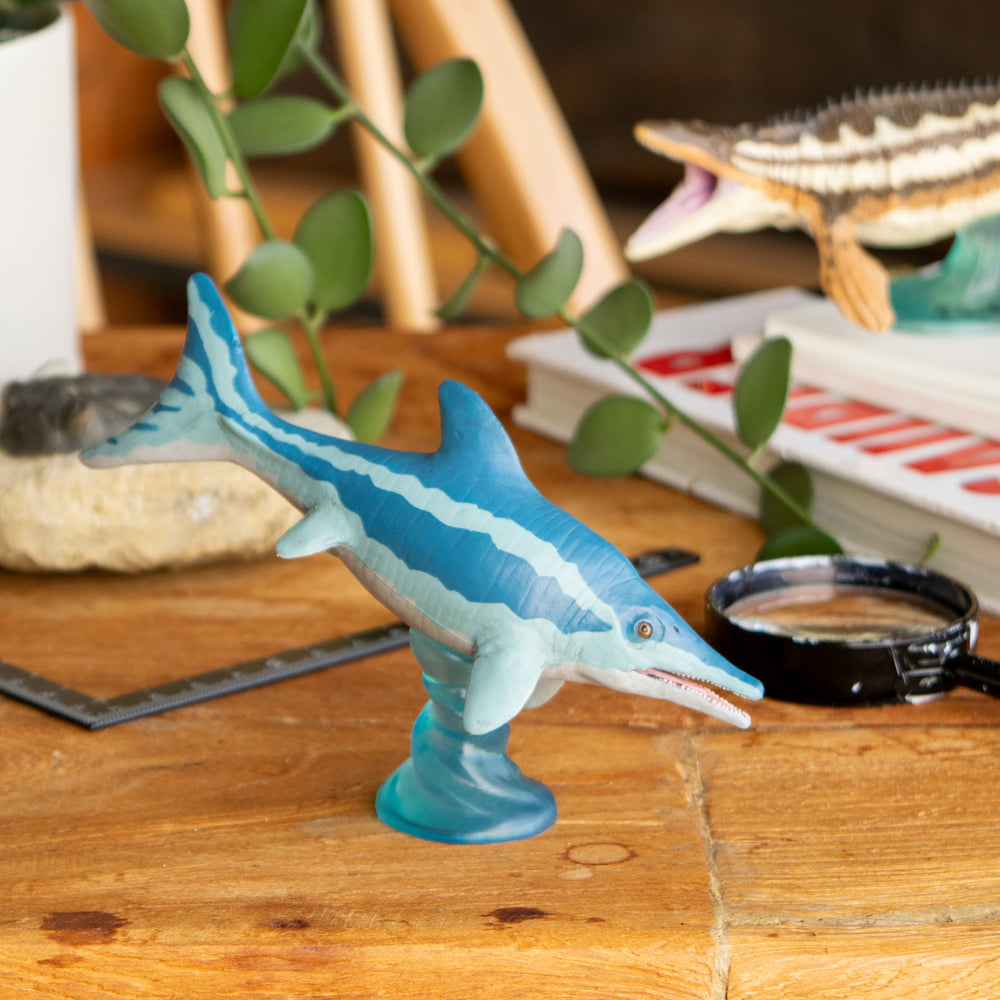
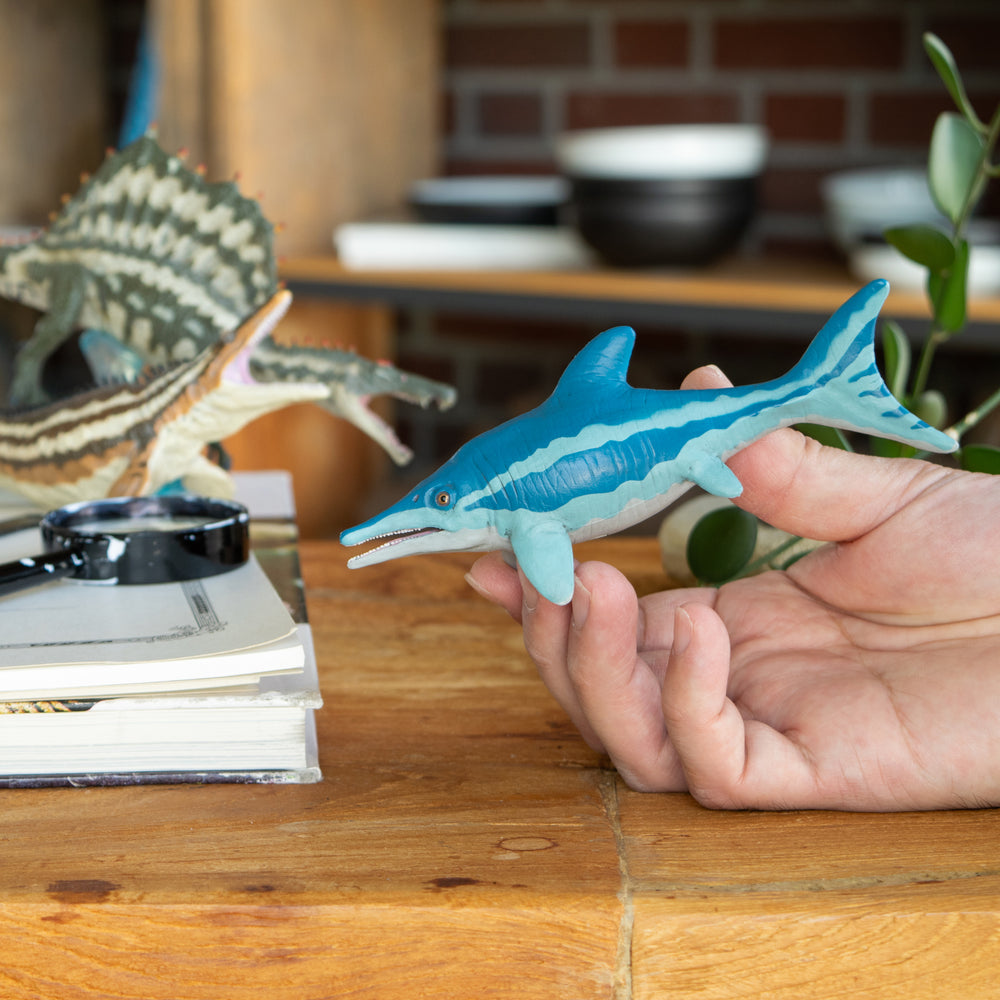
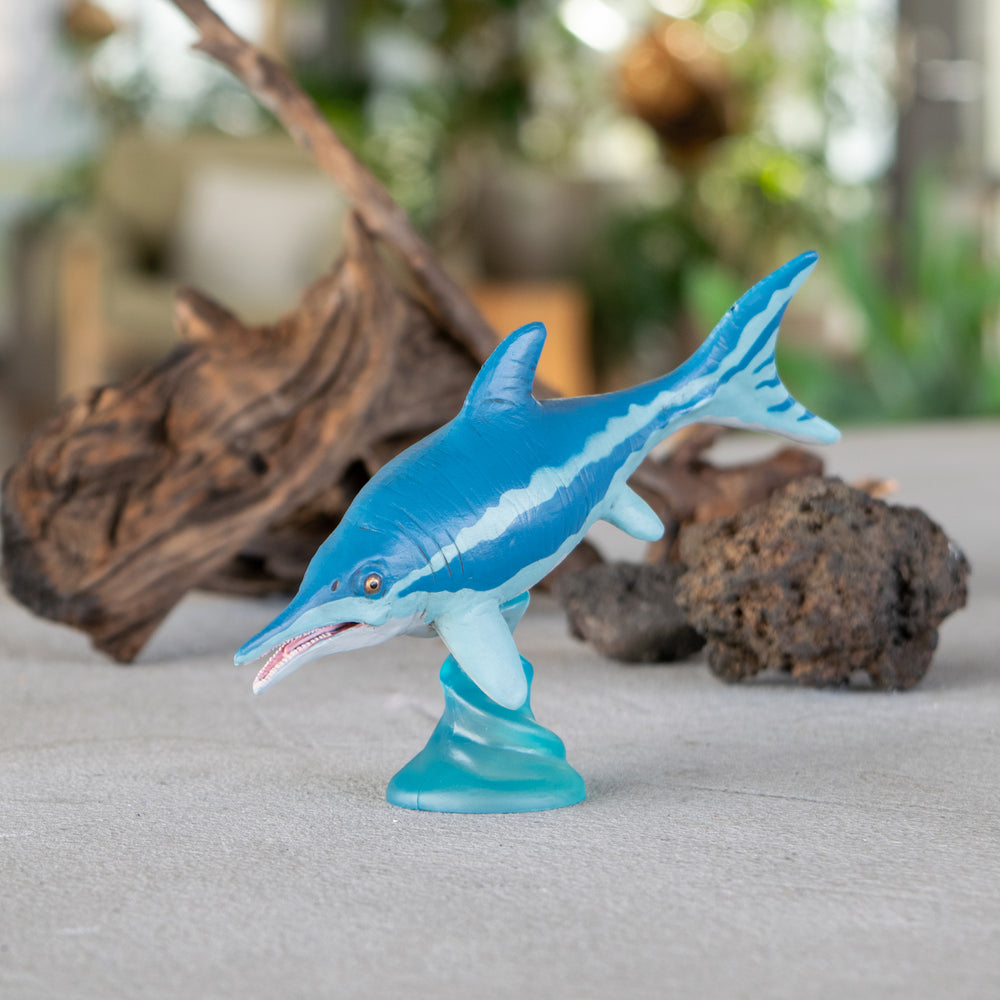
A PVC figure of Ichthyosaurus, an ichthyosaur that lived in the seas during the Early Jurassic. It captures its streamlined, dolphin-like body, large tail fin, and paddle-shaped limbs. Its collectible size makes it enjoyable both for play and display.
Ichthyosaurus
Classification: Reptilia/Ichthyosauria/Ichthyosauridae
Size: Total length3meters
Period: Late Triassic–Early Jurassic
Ichthyosaurus was an ichthyosaur that resembled modern dolphins. Its head flowed smoothly into a streamlined body, and paddle-like limbs and a large tail fin likely helped it move rapidly through the water. Its eyes were very large, allowing it to spot large marine reptile predators from a distance. Its long jaws were lined with many sharp teeth, and fossilized stomach contents show that it preyed on fish and squid.
Interview with Supervisor Kazunari Araki
- Ichthyosaurus, one of the best-known ichthyosaurs, has joined the Soft Model series. What are your impressions of Ichthyosaurus?
- Ichthyosaurus
- Ichthyosaurus
- Ichthyosaurus
If only its bones had been preserved, it might have been reconstructed with a long, narrow dorsal fin and tail.
In the crescent-shaped tail fin, the preserved bones are actually in the lower half, which is reflected in the model.
As a reptile, it may have had fine scales on its skin, or its skin may have been smoother. Since there is no fossil evidence either way, I added some wrinkles as a sculptural interpretation. - What kind of image did you have in mind when sculpting the poses and bases?
- Ichthyosaurus
Depending on how the figure is attached to the base, it can be displayed as if diving underwater to attack prey or heading toward the surface. - Ichthyosaurus
- I used flowing blue lines to suggest fast swimming underwater. The back is darker and the belly lighter, as a form of countershading that may help it stay less visible to prey.
- Finally,Ichthyosaurus About the Soft ModelPlease share your comments.。
- Ichthyosaurus
Supervisor Profile
Kazunari Araki
One of Japan's leading dinosaur model artists, he creates dinosaur reconstruction models for natural history museums and master models for dinosaur encyclopedias and other publications.