







Collectible Dinosaur Figures Made with Soft Material
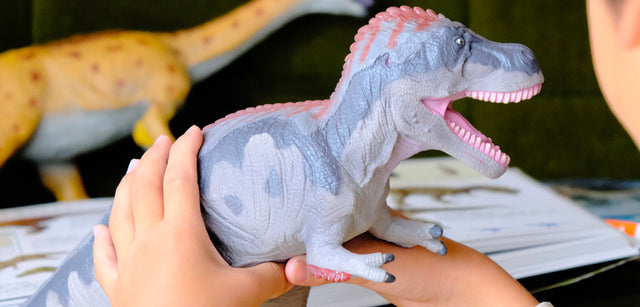
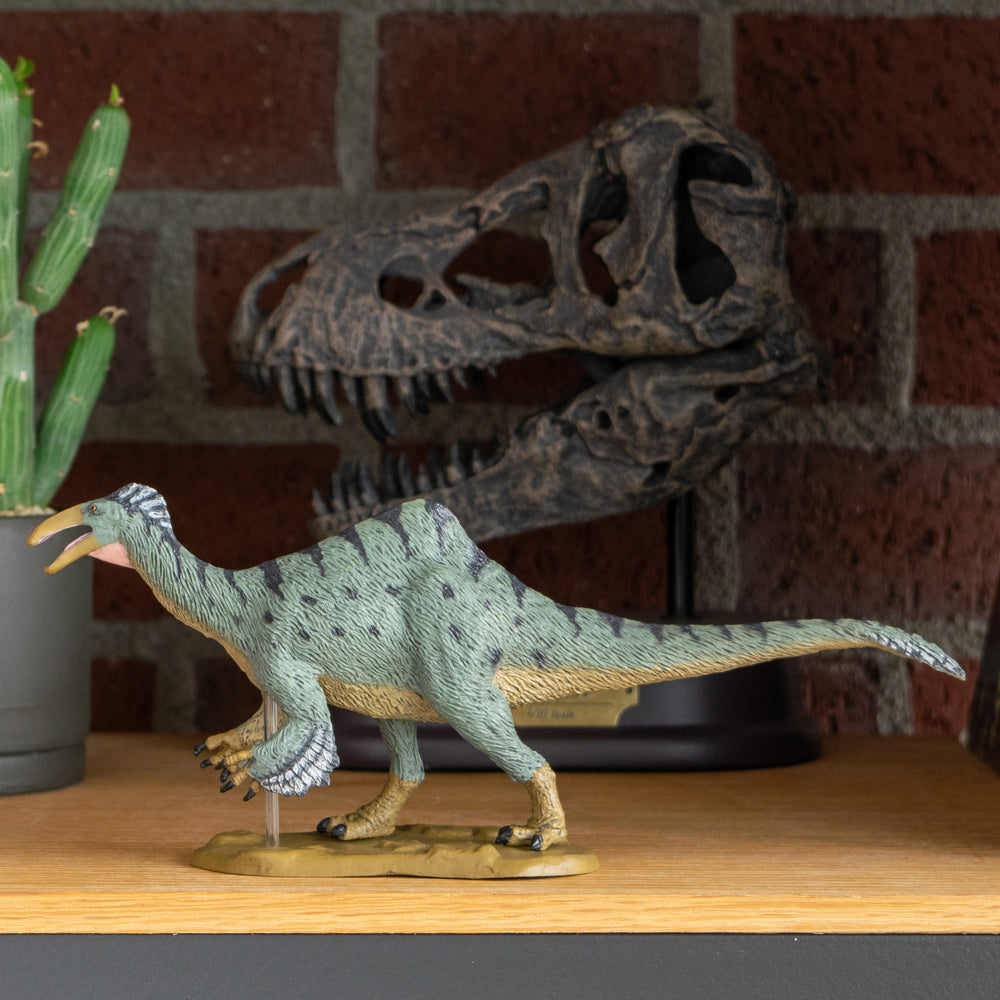
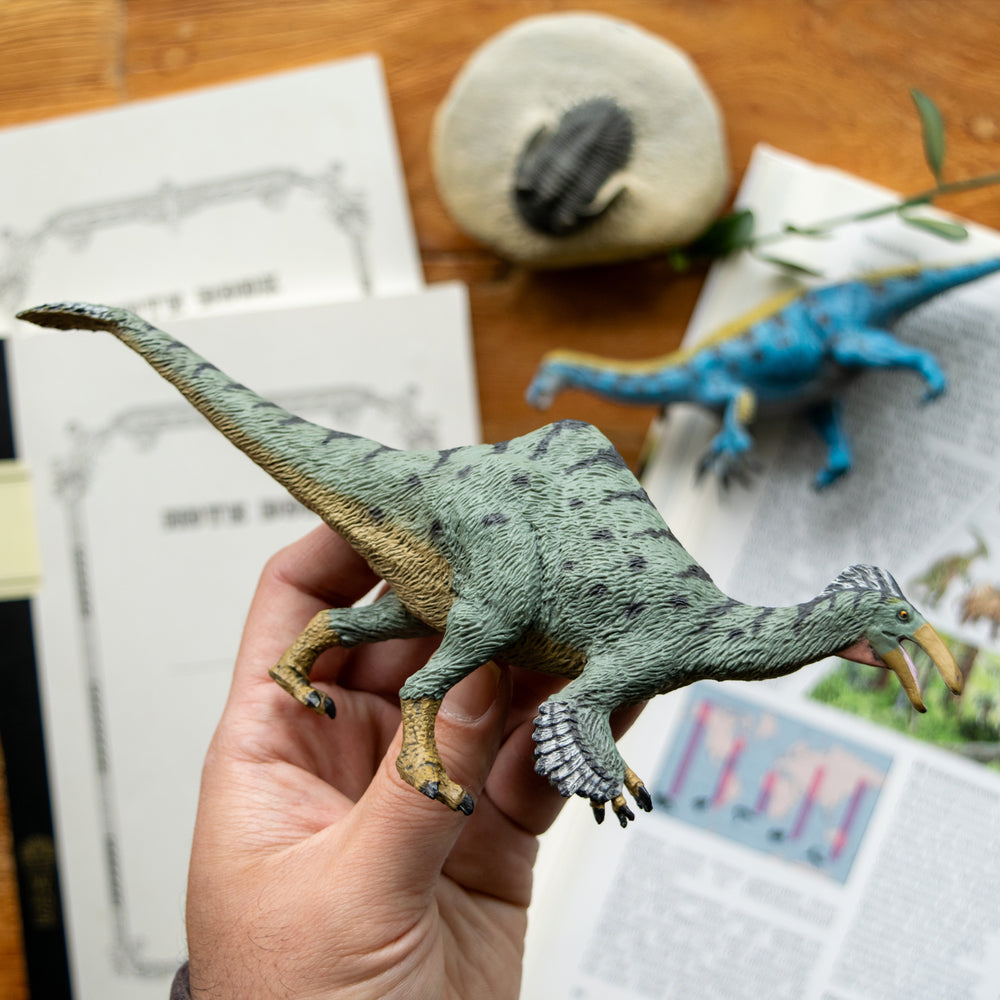
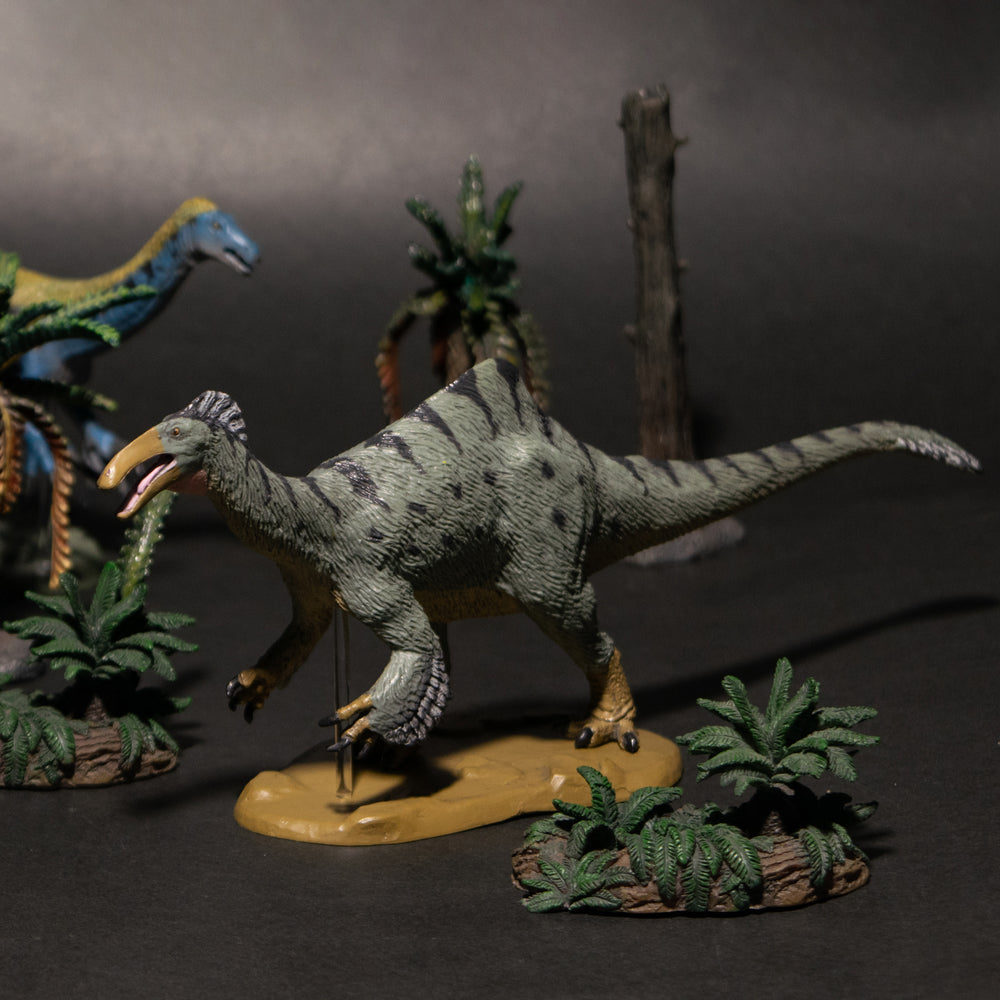
Deinocheirus lived in southern Mongolia during the Late Cretaceous. Enormous forelimbs measuring 2.4 m were discovered in the Gobi Desert in 1965, but its overall appearance remained a mystery until more complete fossils were found decades later.A PVC figure of Deinocheirus, a dinosaur whose enormous forelimbs were discovered long before the rest of its body was understood. Its collectible size makes it enjoyable both for play and display. A PVC figure of Deinocheirus, a dinosaur whose enormous forelimbs were discovered long before the rest of its body was understood. Its collectible size makes it enjoyable both for play and display.Its enormous forelimbs were discovered first, and its overall appearance became clear only in recent years. Its collectible size makes it enjoyable both for play and display.
DeinocheirusDeinocheirus
Classification: Saurischia/Theropoda/Deinocheiridae
Size: Total length 11 meters
Period: Late Cretaceous
A large dinosaur that lived in southern Mongolia during the Late Cretaceous. In 1965, enormous forelimbs measuring 2.4 m were discovered in the Gobi Desert, but only a few bone fragments were found elsewhere, leaving its appearance a mystery for nearly half a century. Later discoveries of nearly complete skeletons clarified its anatomy. Its head, about 1 m long, had a keratinous beak. Numerous gastroliths and fish bones and scales were found near its abdomen, suggesting an omnivorous diet. Its broad pelvis and short, thick hind limbs indicate it was built more for stability than running.
Interview with Supervisor Kazunari Araki
- Deinocheirus, whose enormous arms were discovered long before its overall appearance became known, has joined the Soft Model series. Mr. Araki, what are your impressions of Deinocheirus?
- Therizinosaurus
At the time, only fossils of the arms (forelimbs) had been found, so I remember making a model display that showed only the two arms.
Its appearance has been reconstructed in recent years and it has become known through programs such as those on NHK. Its large, bird-like form is very different from the dinosaurs I knew, and it feels like a truly new dinosaur. - Because of its habitat, geological age, and the discovery of its enormous arms, Deinocheirus is often compared with Therizinosaurus in encyclopedias. Their silhouettes are similar, but did you encounter any particular challenges when sculpting Deinocheirus?
- Since Deinocheirus was classified among the ornithomimosaurs, it has been an unfamiliar dinosaur to me, so I referred to many different reconstructions and models. I myself once wondered whether it might be a type of therizinosaur.
I myself was once confused and wondered whether Deinocheirus belonged to the same group as Therizinosaurus.
Reconstructions often show the entire body covered in feathers, but it may have been featherless or had long hair-like feathers similar to a cassowary or emu. For this model, I gave it a covering shorter than an ostrich’s feathers, though there is not much evidence for that choice (laughs). I also added decorative feathers on the top of the head.
For this model, I covered the body with feathers shorter than those of an ostrich, although there is little evidence to support that choice (laughs).
I added a decorative crest of feathers on top of the head as an accent. - What kind of image did you have in mind when sculpting the poses and bases?
- Deinocheirus exceeded 10 m in length, but had a small head and no teeth. It does not seem as ferocious as small ornithomimosaurs or large carnivorous dinosaurs, so I chose a calm, slightly stooped walking pose, imagining it slowly feeding on plants, fruit, and fish rather than being especially active.
Since Deinocheirus was discovered in Mongolia, I envisioned barren terrain for the base. - Deinocheirus
- As always, I choose colors and patterns so that the Soft Models look distinct from one another when displayed as a collection.
I chose gray with stripes this time, and I think the color scheme suits Deinocheirus very well. - Finally,Deinocheirus About the Soft ModelPlease share your comments.。
- As mentioned earlier, the reconstructed Deinocheirus was a completely new dinosaur to me as an older enthusiast. Younger dinosaur fans may already know it from encyclopedias as well as Tyrannosaurus and Triceratops. It has finally joined Favorite’s collection!
Please keep requesting dinosaurs that have not yet joined the collection!
Supervisor Profile
Kazunari Araki
One of Japan's leading dinosaur model artists, he creates dinosaur reconstruction models for natural history museums and master models for dinosaur encyclopedias and other publications.