










Collectible Prehistoric Life Figures Made with Soft Material
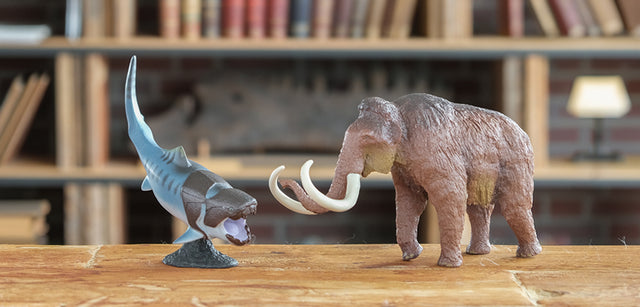
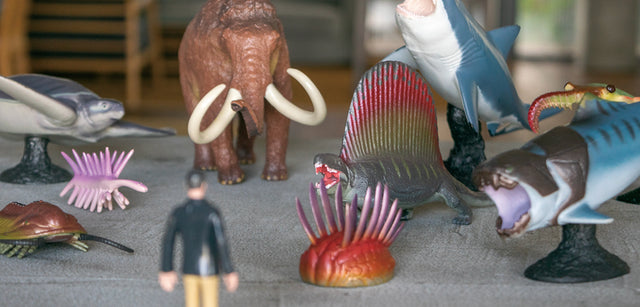
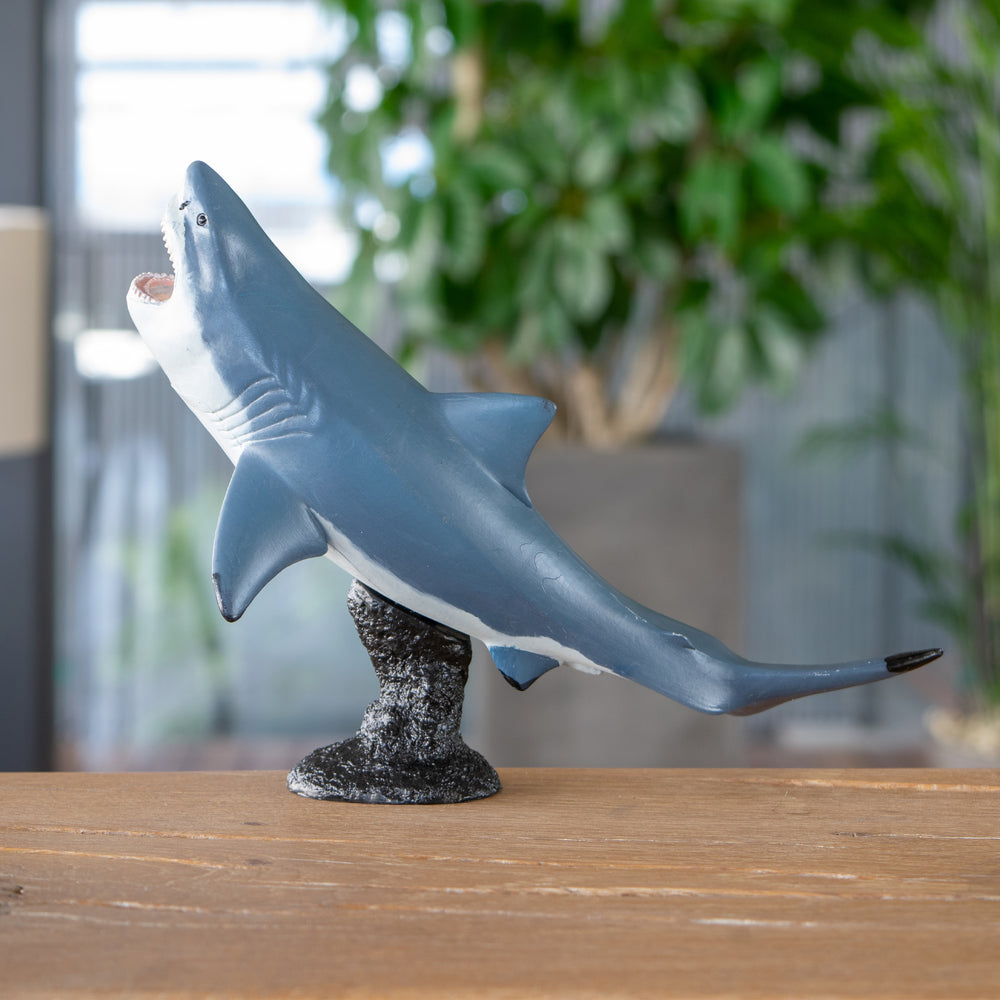
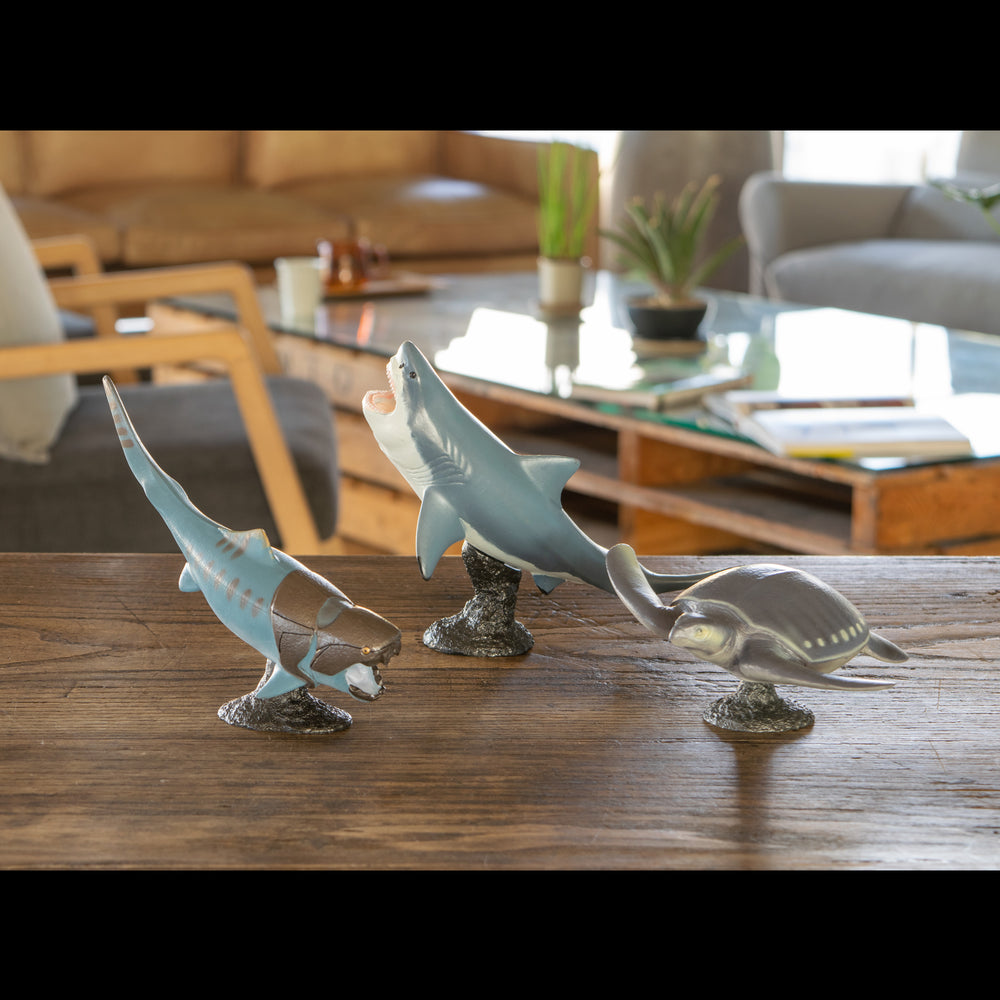
A PVC figure of Megalodon, a giant shark that flourished during the middle part of the Cenozoic Era. Its collectible size makes it enjoyable both for play and display.
Megalodon
Classification: Lamniformes/Lamnidae/Carcharocles (related to the great white shark lineage)
Size: Body lengthapproximately 16meters
Period: Miocene–Pliocene, Cenozoic Era
Megalodon
Interview with Supervisor Hirokazu Tokugawa
- Megalodon, one of the largest sharks, flourished during the middle part of the Cenozoic Era and is now available as a Soft Model and a Vinyl Model. Mr. Tokugawa, what image do you have of Megalodon?
- If we imagine Megalodon as a large great white shark, it is easier to picture it alive than a dinosaur, for which no similarly shaped large modern animal exists. Still, it is hard to grasp its true size, especially since I have never seen a great white shark up close. Sculpting Megalodon helped me form a clearer image of it. Its face seems to suit the description “formidable,” though of course I cannot know whether that is accurate.
- Megalodon
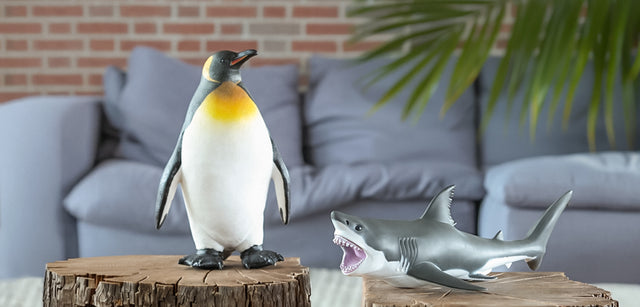
- If Megalodon were simply a “big great white shark,” it would have been difficult to justify making it as a separate product. When the project was proposed, I first asked Professor Tomita, the supervisor, about the differences from the great white shark. He explained that the jaw shape suggested Megalodon may have had a somewhat different facial appearance. That convinced me the model was worth developing, although the great white shark remained an important reference.
- Are there any defining features that distinguish Megalodon from sharks living today?
- Because sharks have cartilaginous skeletons, fossils rarely preserve the vertebrae and other parts of the body; reconstructions of Megalodon are therefore based mainly on its teeth and jaws. Teeth reveal many distinctive features of sharks, including Megalodon, but these details cannot be shown fully at figure scale. The most important feature of this model is therefore the difference in facial appearance created by the jaw shape compared with the great white shark.
- The paintwork uses a shark-like color scheme similar to that of the great white shark. What inspired this approach?
- Among large marine vertebrate predators living today, aside from great white sharks, there are only a few whales such as sperm whales and orcas. Their body colors were not suitable references, so I based the colors on the great white shark. Professor Tomita specifically advised that the boundary between the back and belly colors should be sharply defined rather than blended with a gradient. His supervision helped me capture the subtle differences between Megalodon and the closely related great white shark—differences I might not have noticed on my own. Creating Megalodon also taught me a lot about great white sharks and made me more interested in them.
- Finally, could you share your comments on this model?
- Although Megalodon was related to the great white shark and may have looked similar, it was a distinct species. Professor Tomita’s supervision helped me capture subtle differences I might not have noticed myself. Creating Megalodon also taught me a great deal about great white sharks and made me more interested in them. The appeal of prehistoric life lies partly in how different these animals can be from those alive today.
Supervisor Profile
Hirokazu Tokugawa
paleoartist/prehistoric lifereconstruction model artist
A dinosaur reconstruction model artist who creates works that combine academic research with the appeal of three-dimensional art, he is also a leading specialist in prehistoric life reconstruction models.