







Collectible Prehistoric Life Figures Made with Soft Material
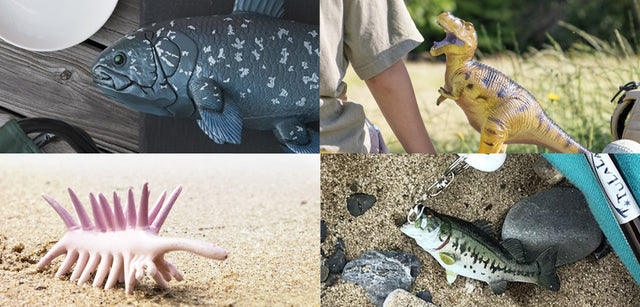
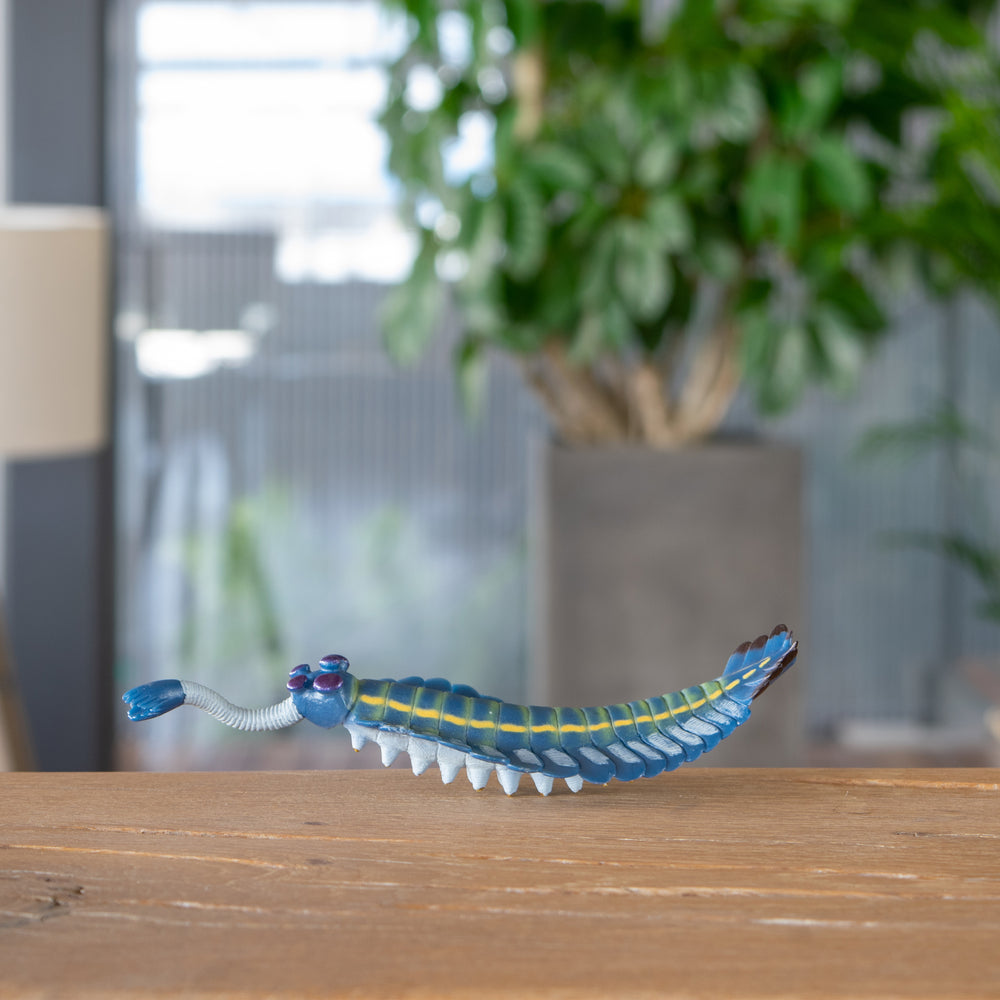
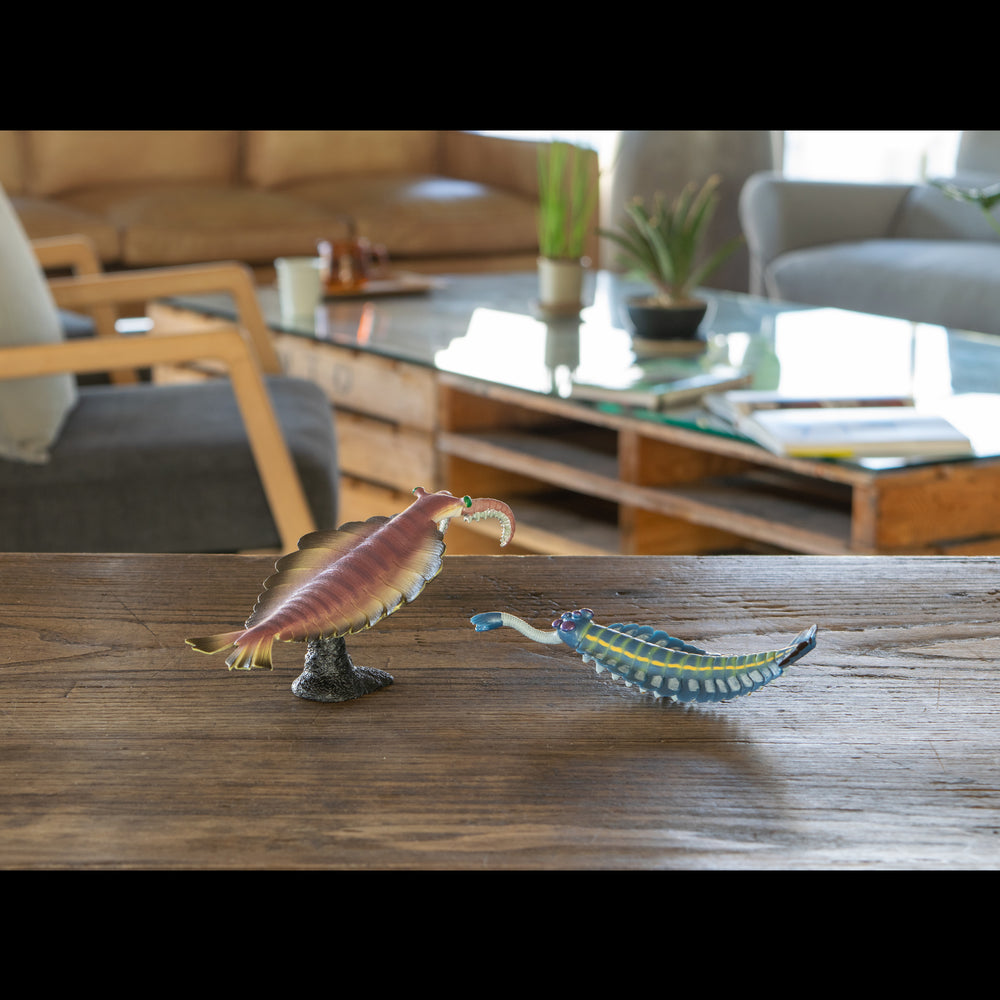
A PVC figure of Opabinia, one of the iconic Burgess Shale animals alongside Anomalocaris. Its collectible size makes it enjoyable both for play and display.
Opabinia
Classification: Radiodonta/Opabiniidae/Opabinia
Size: Body lengthapproximately 7centimeters
Period: Paleozoic, Cambrian
Opabinia is one of the Burgess Shale animals discovered in Middle Cambrian deposits in Canada. It is characterized by five eyes and a long, trunk-like proboscis. The five eyes provided an almost 360-degree field of view above the animal, helping it spot prey. Its body consisted of 15 segments, each bearing a pair of lateral flaps that may have moved in waves to propel it through the water. Similarities in its flaps and feeding appendage have led some researchers to suggest a close relationship with Anomalocaris. When it was first presented to the scientific community, its unusual appearance caused considerable surprise.
Interview with Supervisor Hirokazu Tokugawa
- Opabinia, one of the bizarre-looking animals of the Burgess Shale, is now available as a Soft Model. Mr. Tokugawa, what image do you have of Opabinia?
- All Burgess Shale animals are strange, but Opabinia is among the most unusual. It is thought to have been a swimming predator, although some hypotheses suggest it had legs, as shown on this figure. If so, it may also have walked along the seafloor in search of food. one of the most unusual animals. It is thought to have been a swimming predator, although some hypotheses suggest it had legs, as shown on this figure. If so, it may also have walked along the seafloor in search of food.I think Opabinia is one of the most unusual animals. It is thought to have been a swimming predator, although some hypotheses suggest it had legs, as shown on this figure. If so, it may also have walked along the seafloor in search of food.
- The first thing that stands out about Opabinia is its uniquely strange form. How did the five eyes on the front of its head and the long, elephant-trunk-like appendage evolve, and what functions might they have served?
- The tubular appendage at the front of the head was probably not a mouth; it is thought to have grasped prey or food and carried it to the mouth on the underside of the head. Only one species in the genus Opabinia is currently known, and there are no close relatives with a similar appearance, so the evolution of its proboscis remains unclear. However, Opabinia is thought to be related to Anomalocaris, which had a similar feeding appendage, and further study of anomalocaridids may help explain its function.
- Opabinia demonstrates the extraordinary diversity of early animal life, but its unique form, unlike that of any living creature, was challenging to sculpt. What references or images did you use during development?
- I used velvet worms as a reference for the legs. For the rest of the body, I could not find a close modern animal to use as a guide, so I relied on fossil images and descriptions and illustrations in several research papers. Reconstructions also differ depending on the paper and its publication date, so I combined elements from several interpretations.
- The model uses a blue-based color scheme. What inspired this approach, and were there any modern animals you used as references?
- Because some research suggests Opabinia was related to velvet worms and may have had similar legs, I used velvet worm colors as one reference. I also looked at sea slugs as similarly sized predators. Since Anomalocaris, another product in the Prehistoric Life series, has a reddish color scheme, I chose blue to create a clear contrast between the two models.
- Finally, could you share your comments on this model?
- I think Opabinia is one of the iconic Burgess Shale animals alongside Anomalocaris. Its strange appearance seems to symbolize the Cambrian Explosion, when animals with many different body plans appeared in a relatively short period. Despite its unusual form, it also looks somewhat humorous, and I imagine that seeing a living Opabinia might even make people think it was cute.
Supervisor Profile
Hirokazu Tokugawa
paleoartist/prehistoric lifereconstruction model artist
A dinosaur reconstruction model artist who creates works that combine academic research with the appeal of three-dimensional art, he is also a leading specialist in prehistoric life reconstruction models.