







Palm-Sized Prehistoric Life Figure
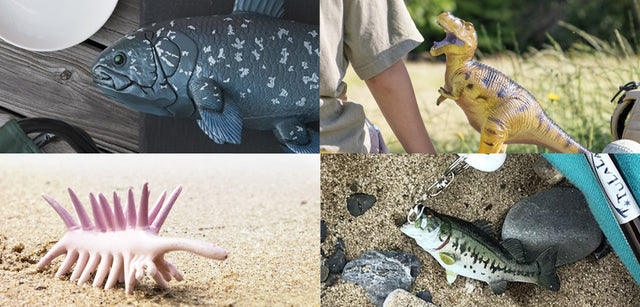
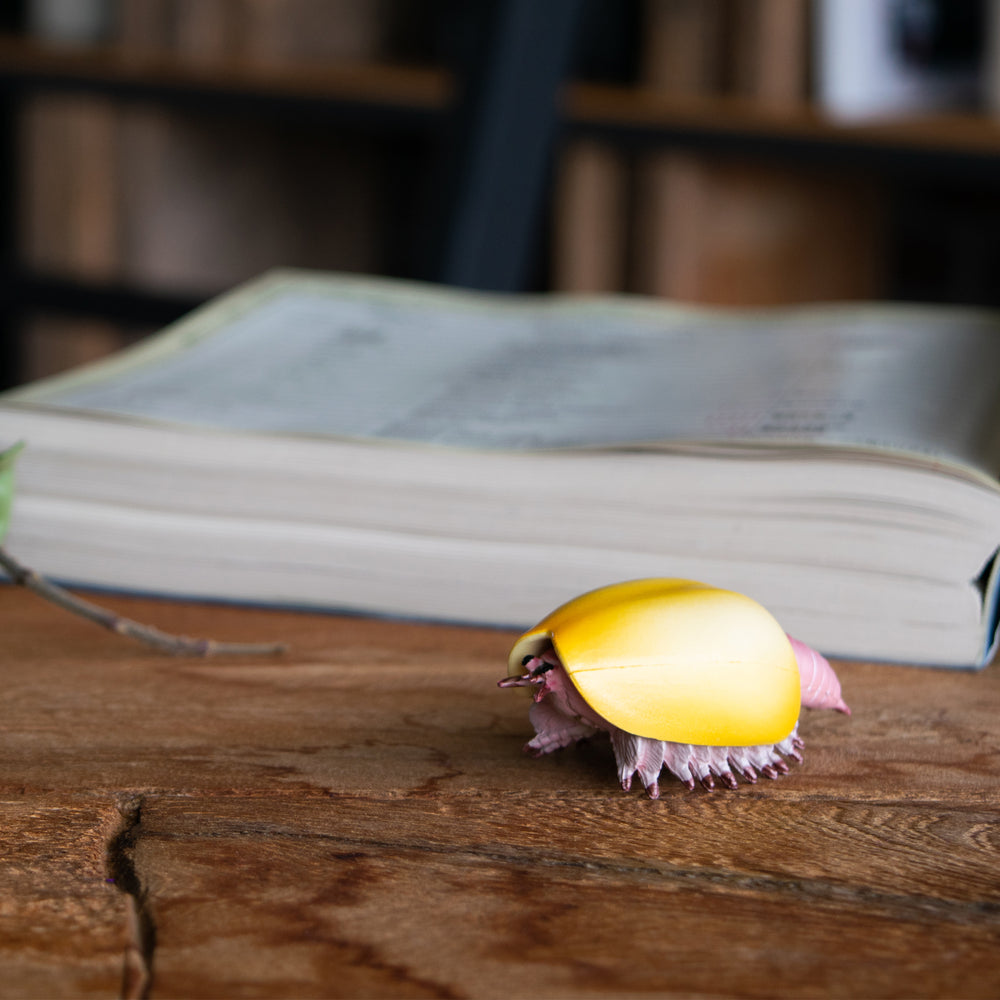
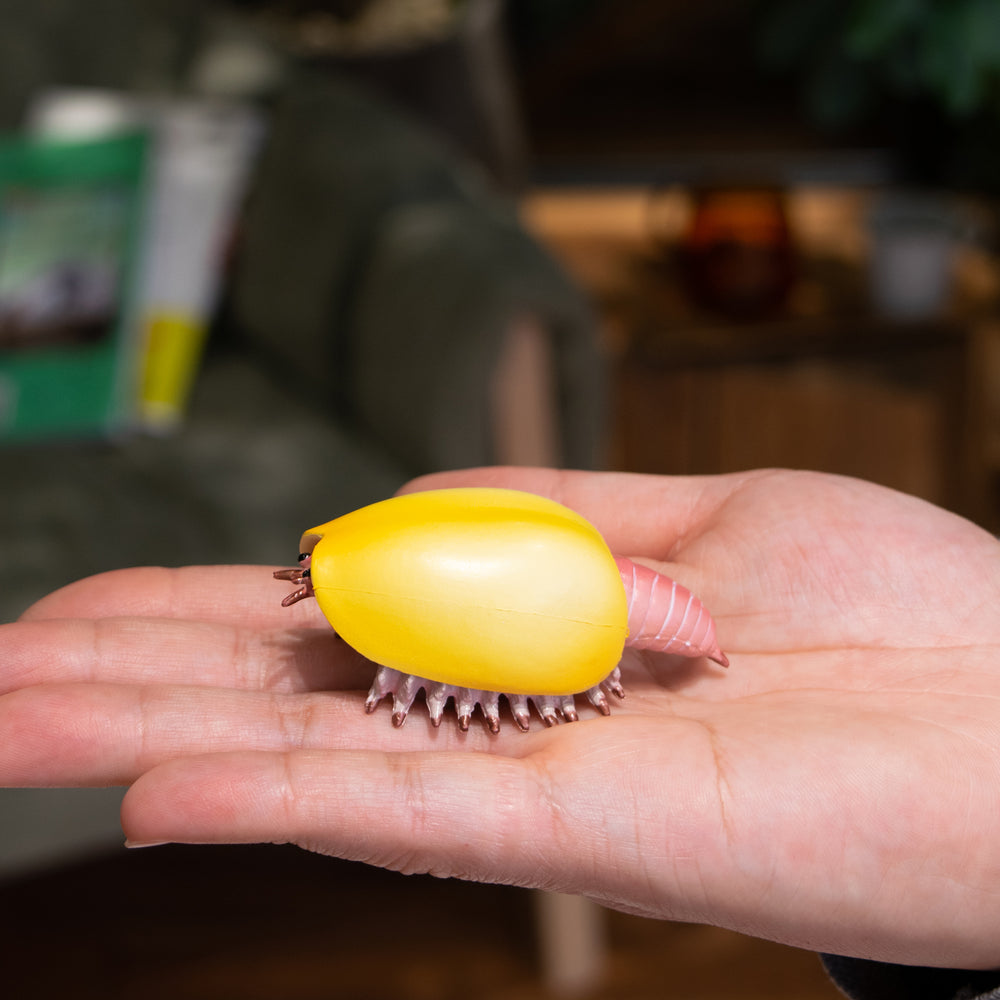
A PVC Mini Figure of Canadaspis, a distinctive animal discovered in the Middle Cambrian Burgess Shale. Its compact size makes it easy to display on a desk or shelf. An information card is included.
Canadaspis
Classification: Hymenocarina/Canadaspididae/Canadaspis
Size: Body lengthapproximately 7centimeters
Period: Paleozoic, Cambrian
Canadaspis had a cylindrical body, with a large carapace covering about two-thirds of the front portion. The carapace consisted of a pair of shell-like plates that enclosed the body, with antennae and eyes protruding from the edges. Its appendages were biramous: the inner branches were walking legs, while the outer branches served as gills.
Interview with Supervisor Hirokazu Tokugawa
- These Cambrian creatures are newly joining the Mini Model lineup. What are their scientific characteristics, and what do you find particularly appealing about them?
- Among Cambrian animals, the Burgess Shale fauna represented by Anomalocaris is particularly popular and well known for its bizarre and unusual forms. Not only their appearance but also their ecology remains mysterious, and scientific theories and discussions surrounding them have changed in various ways. I believe these animals embody much of the fascination of prehistoric life research.
- Although these are highly detailed, palm-sized mini figures, what are your impressions of this series?
- Figures are usually reduced-scale models of the actual animals, but these Burgess Shale figures are even smaller. Some are still close to life size, while others are enlarged, which may be one of the biggest differences in my approach compared with producing other dinosaur and prehistoric life series. For this series, I also wanted to make use of the small figure size to express the charm and cuteness created by the animals’ unique forms.
- These creatures remain shrouded in mystery and have strikingly strange and unique forms. What points did you pay particular attention to when sculpting them?
- The unique forms are immediately apparent from the fossils, but some species have few reference materials available. In addition, many fossils are found flattened, making three-dimensional reconstruction difficult. Some, such as Hallucigenia, have had their reconstructions revised repeatedly. For this figure series, I referred to as many references and papers as possible, but selecting and evaluating the information was often difficult for me, and the discussions I had with the supervisor, Professor Ohji, were invaluable. Just as we began producing the master models, I had the opportunity to visit the “Life: A Journey Through the Evolution of Life” exhibition with Professor Ohji. Being able to discuss reconstructions with him while viewing famous fossils in person was an extremely enjoyable and fortunate experience, both for this sculpting project and as a fan of prehistoric life.
- What concepts did you use as the basis for the color schemes? Please also tell us about any motifs or images you had in mind.
- The color schemes are even less certain than those of dinosaurs and other prehistoric life, which gives us greater creative freedom. It was fun to turn the lack of known colors to our advantage and choose bold color schemes. Since there are eight species in the series, I paid attention to variety across the lineup and selected colors that seemed plausible based on each animal’s form and ecology. Some were inspired mainly by modern-day sea slugs, crustaceans, and other animals.
- As a palm-sized figure series, these models can be easily displayed anywhere and enjoyed in a variety of settings. Do you have any recommended display methods or presentation ideas?
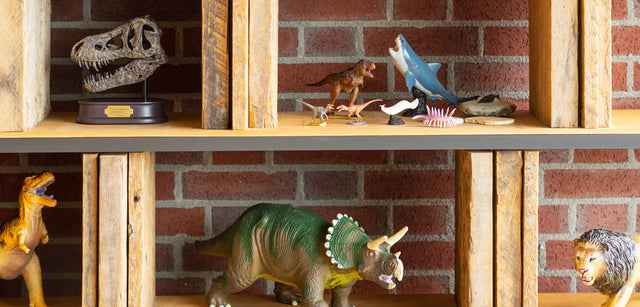
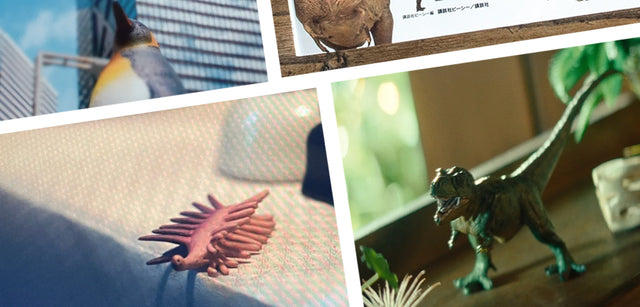
- All of these animals lived in the sea, but for legged species such as Canadaspis and Olenoides (a trilobite), I think secretly placing them in a houseplant pot could be a fun way to display them, taking advantage of their small size. They are also easy to place in empty spaces on a bookshelf. Their palm-sized scale gives them a unique presence and charm.
- Finally, could you share your comments on this model?
- The series features well-known Burgess Shale animals such as Anomalocaris and Opabinia, alongside less familiar species such as Canadaspis and Wiwaxia that are rarely seen in commercial products. This makes it a distinctive collection of prehistoric life figures.
Supervisor Profile
Hirokazu Tokugawa
paleoartist/prehistoric lifereconstruction model artist
A dinosaur reconstruction model artist who creates works that combine academic research with the appeal of three-dimensional art, he is also a leading specialist in prehistoric life reconstruction models.