

Vol. 90 Terror Birds, Astrapotheres, and Incisivosaurus
This time, I've gathered models of terror birds and desmostylians as they came to mind. If I had to force a commonality between these two seemingly unrelated groups, it would be that both lived in North America during the Cenozoic Neogene period. Unfortunately, desmostylians became extinct approximately 10 million years ago, while the terror bird Titanis is believed to have migrated from South America around 5 million years ago, so it seems there were no bloody conflicts between them.
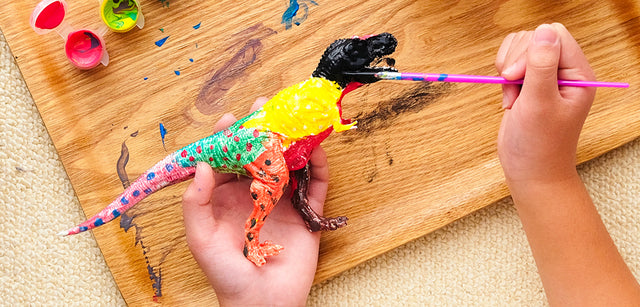
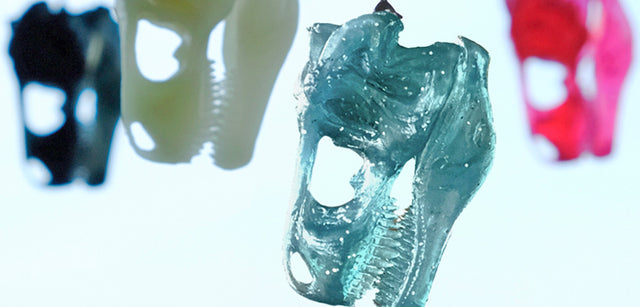
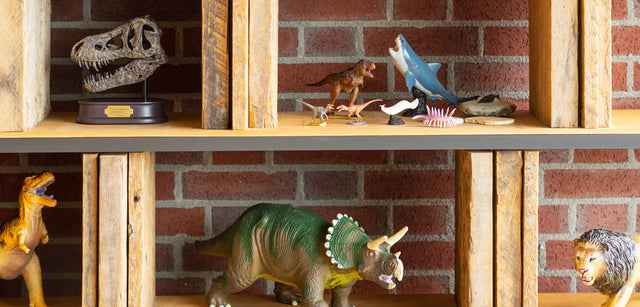
There's no particular reason for this combination, which doesn't seem to make sense no matter how you look at it. It's simply that I bought 3D printed replica skulls of the terror bird Gastornis and the desmostylian Paleoparadoxia on Yahoo! Auctions and quickly assembled them. They turned out surprisingly well, and I wanted to show them off to everyone. However, in collecting these figures, I discovered an unexpected commonality: both are famous prehistoric animals but are not well represented in terms of figures. Terror birds, with their striking appearance, do have a fair number of figures, but they are still far from the Cenozoic stars like mammoths and saber-toothed tigers. As for desmostylians, they are practically ignored in the world of prehistoric animal figures. They don't appear in Chocoasaurs or Ania. I suppose it's because of their rather plain appearance. Before I introduce these unfortunate two species' figures, let's take a look at the Incisivosaurus from Dublin, which I previously announced as "a uniquely exceptional skull coming soon." Incisivosaurus is a small basal oviraptorosaur that once attracted attention for its rodent-like incisors.
According to AI information, its first appearance in Japan was at "Dinosaur 2009 - Miracle in the Desert" held in Makuhari in 2009. At that time, it seems to have been quietly displayed among many highlights such as the mummified dinosaur "Dakota," the debut of the complete Spinosaurus skeleton, and the shocking debut of Gigantoraptor. I don't remember it myself. However, I have encountered it at several dinosaur exhibitions since then and it has left an impression.
Image 1

This is the second installment in my requested life-size wooden skull series, following the Heterodontosaurus introduced in New Treasure Museum Vol.88. Lately, I've been fascinated by small dinosaurs with unique dentition. Other candidates for this request included the mysterious Triassic carnivorous dinosaur Daemonosaurus with abnormally large teeth, the Scansoriopterygidae Epidexipteryx with protruding lower incisors, and the herbivorous Chilesaurus, which is debated as either a theropod or ornithischian. However, due to a lack of available data for these, I settled on Incisivosaurus, for which relatively more diagrams exist. As always, the result is so good that I want to meticulously boast about it. It's difficult to decide what to request next. I want to stick to life-size, so perhaps Masiakasaurus...
In the Showa era, the terror birds generally known from encyclopedias were only Gastornis, called Diatryma, and Phorusrhacos. Today, as stated on Wikipedia, they are further subdivided.
In the era when it was called Diatryma, Gastornis was depicted as the strongest bird, with a hooked beak and powerful legs, preying on creatures like Hyracotherium. Phorusrhacos was a lightweight, fast hunter, and I remember their relationship being like that of a lion and a cheetah today. Explanations casting doubt on this, such as that the two did not coexist, were not found in boys' encyclopedias of the time. Unfortunately, the fearsome Gastornis is now believed to have had a blunter beak and has been reclassified as herbivorous. It's a shame. Still, encountering one in the wild would probably be as terrifying as encountering a bear. I don't think it needs to give up its "terror bird" title.
*Recently, I saw an incredible video on YouTube. A seagull swallowed a live rabbit or squirrel, larger than its own head, whole. This means that a Gastornis with its huge head could easily have swallowed a Hyracotherium whole. Don't underestimate it just because it couldn't tear meat apart.
Gastornithidae Figures
Image 2

Gastornis
The upper left is from Safari in 2013. The center is a cheap 3D printed replica that I created (colored) this time, and it seems to use the same data as the complete skeleton on the right made by Amphi. Only these three species released relatively recently are named Gastornis, the rest are Diatryma. In fact, this skeletal specimen of Gastornis gigantea was also considered Diatryma for a long time.
Diatryma
Although it has now been integrated into the genus Gastornis, many of these figures are from when it was still classified as the genus Diatryma.
From the middle row left:
・MPC: 60s-70s America
・Starlux: 70s France
・Bullyland: 90s Germany *Labeled as 1/24 scale
・Schleich: 80s Germany
・Chocozasaurus Vol.1 (2001)
・Unknown origin: Believed to be a candy toy or gashapon
・Colorata Dimensional Encyclopedia - Extinct Cenozoic Animals Set (2019) *A rare item that still calls itself Diatryma despite being a 2019 product
The lower left is a "Diatryma" from Daikyo, which is apparently traded at high prices among soft vinyl enthusiasts. It's from the 60s (Treasure Museum Vol.36).
The right is a Peruvian ceramic dinosaur from the dinosaur boom of the 90s. And nestled slightly below the center is the only terror bird that is not a Gastornithidae but is considered its sister group, the Australian terror bird Dromornis. Speaking of Australia, of course, there's the original Chocozasaurus, Yowie's "Lost Kingdom Series" (2000). This is Series A #36. It's quite a treasure, as it's not very common in Japan.
Phorusrhacidae Figures
Image 3

Once treated as inferior to Diatryma and outnumbered in figures, the tide has now turned, with more species and a wider range of figures available. They are just so fierce and cool!
Phorusrhacos
The upper left is from Aurora's Prehistoric Scene series, a masterpiece in model kit history.
To its right is a Starlux product from France (1970s).
The far right is CollectA (2024).
Kelenken
The skeleton is from VWUVWU in China, obtained on Amazon. The living figure is CollectA (2011).
Titanis
As stated on Wikipedia, Titanis is an interesting bird that may have had movable arms. So, the figures also reflect this, with talons and similar poses. The black one is from Kaiyodo Dinosaur Model Illustrated Book Dino Tales 7 (2006), and the right one is from Miniature Planet (2023). And the one somewhat below the center is from a modern soft vinyl manufacturer called "Butanohana," which has appeared several times in the Treasure Museum (Vol.38/Vol.82). Its molding is characterized by following the taste of Showa-era soft vinyl while emphasizing characteristic features, which only a paleontology enthusiast could have been involved in. This Titanis also has two fingers.
And finally, though it has no phylogenetic relationship with the Phorusrhacidae, here is the secretarybird (CollectA) that I've grown fond of recently.
The closest living relatives to the Phorusrhacidae are the seriemas (Cariamidae), and both groups are included in the order Cariamiformes. I would like to include a seriema figure, but none exist. At that time, I found a description online stating that the seriema's morphology has converged with the secretarybird's due to diet and other factors. So, by extension, the secretarybird's appearance here is a stretch, implying that it has converged with Phorusrhacos. But in fact, I've long suspected that early Phorusrhacos reconstructions might have been inspired by the secretarybird. Don't their black and white body colors look strikingly similar? In the first place, "terror birds" is not a scientific classification; it's a catch-all term for large terrestrial carnivorous birds. If a terrestrial hunting secretarybird were to grow larger and lose the ability to fly, it would be a splendid terror bird.
Desmostylian Figures
Image 4

Now for the desmostylian figures. Despite Desmostylus and Paleoparadoxia being discovered in various parts of Japan, and many museums displaying their fossils, their figure representation is pitiful. Is it really okay for Japan's representative prehistoric animals to be treated this way! I was indignant, but...
To be honest, I knew almost nothing about desmostylians myself. I mostly walked past them in museums. I didn't even know the difference between Desmostylus and Paleoparadoxia. Their body shape just didn't appeal to me. I deeply regret it now.
Making a Paleoparadoxia skull this time was a rewarding experience, as I discovered it's quite a fascinating animal. I plan to study it more. However, the scarcity of merchandise for these creatures is disheartening...
Desmostylus
The skull is a strap from a limited-edition gashapon sold at the "Ancient Mammals Exhibition" held at the National Museum of Nature and Science in 2014. It was made by Kaiyodo. The complete skeleton is an original product from the Hokkaido University Museum, called "Paper Museum." It was created in 2009, made by assembling cardboard cut with a laser. The " Toy Museum" website also featured other similar paper crafts.
Paleoparadoxia
A 3D printed model purchased for 2700 yen from Ral_Shop on Yahoo! Auctions. It looks quite impressive when painted. It's hard to tell from the photo, but the desmostylian teeth are also properly painted in different colors. The plush toy is a souvenir from the Mie Prefectural Museum. As for figures, the Colorata立体図鑑 (Dimensional Encyclopedia) might be the only commercially available product in the world (I searched American websites too, but found no others). It was included in the same extinct Cenozoic animal box as the Diatryma mentioned earlier. There are also plush toys like this.
There are so few desmostylian goods, which is very disappointing, but there's a piece of good news...
While searching this time, I discovered that the Ashoro Museum of Paleontology in Hokkaido has made 3D printed miniatures of the full skeleton and skull of Ashoroa, a desmostylian discovered in Ashoro, and the skull of Behemotops, available as merchandise. It was too late this time, but I might be able to get them soon. I will report back then.
....
Since there are so few desmostylian goods and it feels a bit lacking, I've added another type of extinct mammal: brontotheres. Why brontotheres now? Because in the opening scene of the movie "Red Sonja," which I recently watched, a brontothere mother and child were hunted, and their horns (apparently valuable) were cruelly cut off, which was a heartbreaking scene.
It's difficult to briefly explain "Red Sonja." It's an adventure story about a female swordswoman, part of the "Conan the Barbarian" series of heroic fantasy novels by R. E. Howard, an American pulp magazine writer from the 1930s (which I was obsessed with in my youth). It was serialized in Marvel Comics, with enemies being sorcerers, demons, and monsters. It's in the "Sword and Sorcery" genre, set in the Hyborian Age, an ancient Europe where the Mediterranean Sea didn't exist and Africa was still connected.
So, with a second film adaptation of such a classic after decades, my blood couldn't help but stir, and I eagerly went to see it. And then, there was the sudden brontothere hunt, but it was lucky to see an unexpected scene of brontotheres galloping.
*If you're interested in Conan the Barbarian and the Hyborian Age, click here.
*In the movie, these brontotheres were called "〇〇there," but unfortunately, I missed the name. You shouldn't quibble about them being called by their scientific names when it's set in the distant past. It's a privilege of fantasy films, just like the Archelon in "One Million Years B.C."
*This movie also features cyclopes and giant scorpions. Even though it's CG, their movements evoke stop-motion animation from Sinbad or Clash of the Titans, paying tribute to Harryhausen.
*The Mediterranean Sea did actually dry up, but that was about 6 million years ago during the Miocene. Since the Hyborian Age is set after the sinking of Atlantis, it would likely be about 10,000 years ago at most.
Now, Brontotherium.
I don't quite understand its classification. Anyway, here's a large collection of figures.
Image 5

Embolotherium skull (Safari Prehistoric Mammals Skull Tube 2011) / Embolotherium (GeoWorld 2014) / Brontotherium (Mojo 2013) / Megacerops (TNG 2023) / Megacerops (CollectA 2013) / Brontotherium (Kaiyodo Chocozasaurus Vol.1 2001) / Brontotherium (Starlux 1970s)
And presiding over them at the back like a boss is the Brontotherium plush toy, the character from the 1993 Cup Noodle CM "hungry?".
Finally, I'd like to introduce my spoils from the recent Shinjuku Mineral Show. For some reason, there were fewer overseas fossil dealers participating this time, which left me with a feeling of dissatisfaction. This is pretty much my only purchase.
Image 6

Hoplophoneus 3D printed replica
From the Oligocene of Wyoming.
...For some reason, the canines are small