

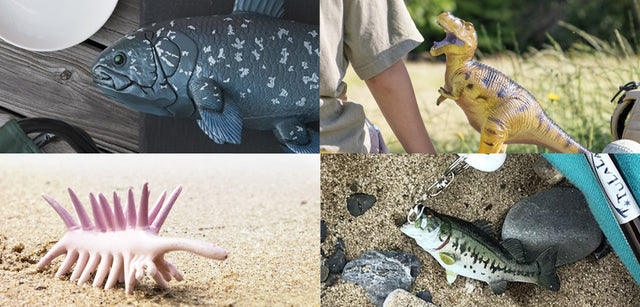
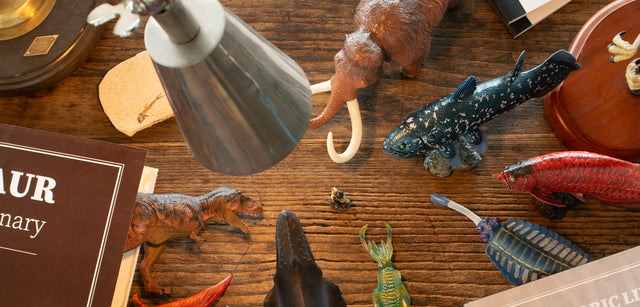





Collectible figures of ancient fish made with soft material
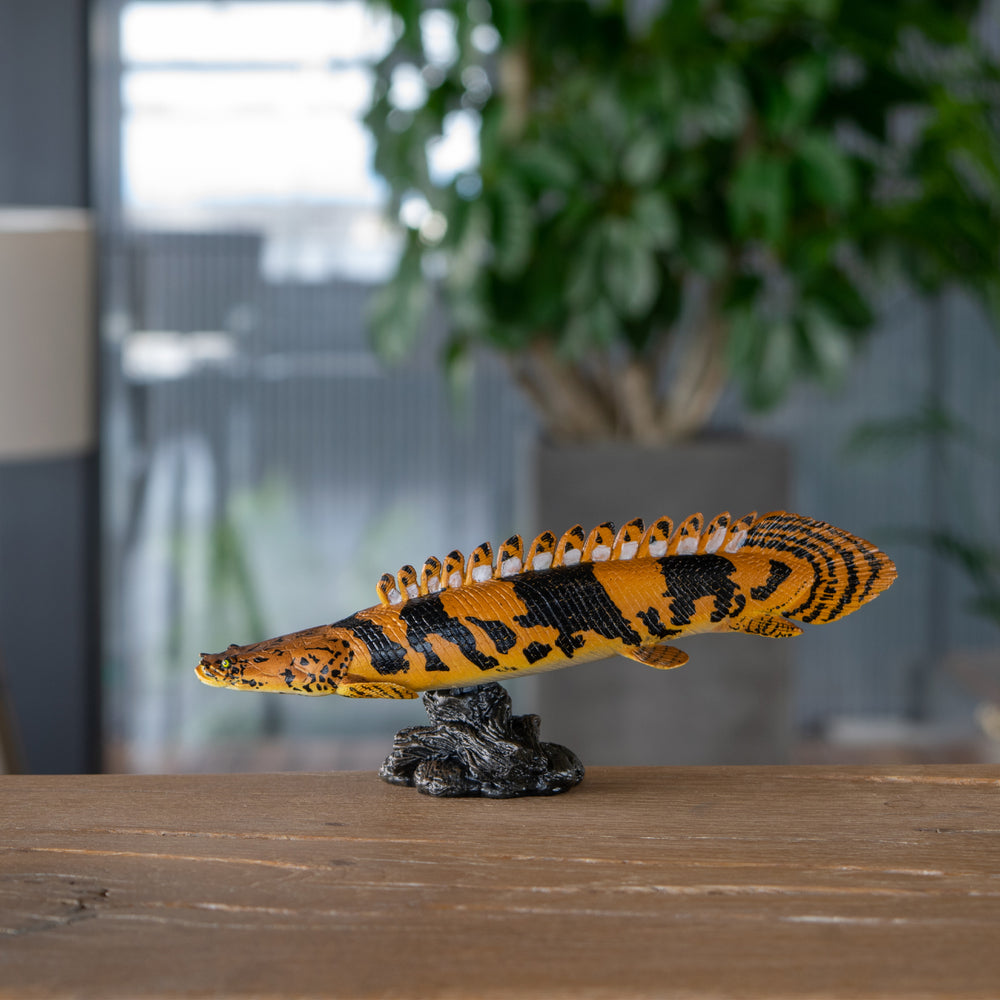
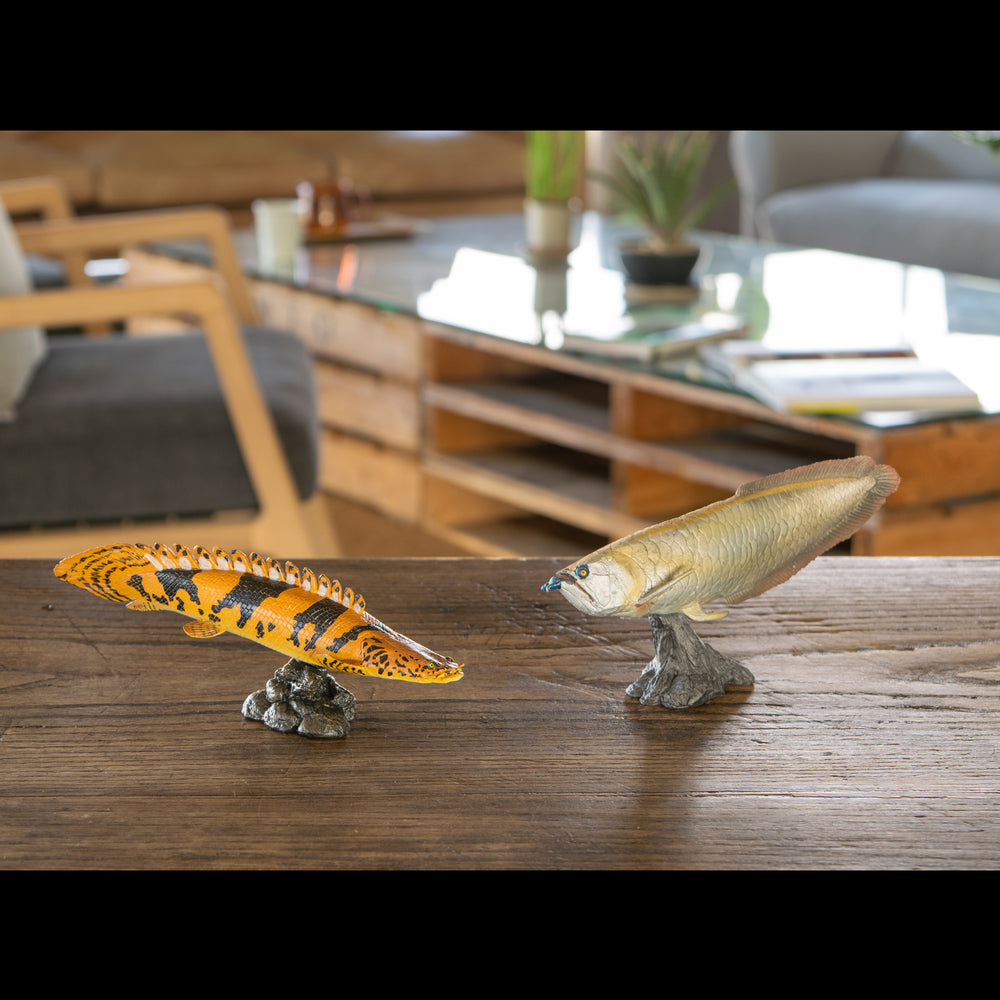
A PVC figure of Polypterus endlicheri, distinguished by its row of separate dorsal finlets. Its collectible size makes it enjoyable both for play and display.
Saddled bichir
Classification: Polypteriformes/Polypteridae/Polypterus
Size: Body lengthapproximately 70centimeters
Habitat: White Nile and rivers and lakes of West Africa
Polypterus species living in African freshwater are survivors of a group that flourished in the past and are often called “living fossils.” Their most distinctive feature is the row of separate dorsal finlets, which gives the group its name. The body is covered with unusually hard scales, and the fleshy bases of the pectoral fins can support the body underwater like forelimbs. The swim bladder has a lung-like structure, allowing them to breathe air.
Interview with Supervisor Kazuyuki Mori
- The Ancient Fish series is a new category added to Favorite’s lineup. First of all, what kind of creatures are “ancient fish”?
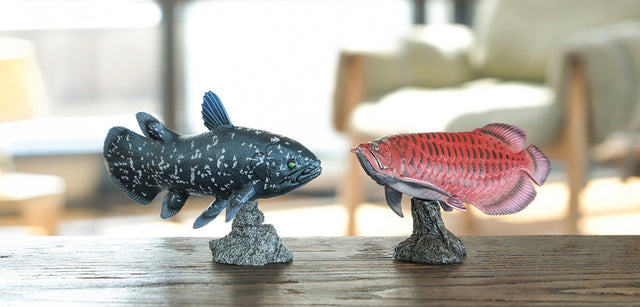
- The term “ancient fish” can be interpreted in several ways, but simply put, it refers to modern fish that have survived to the present while retaining primitive characteristics. In this series, the coelacanth is the most ancient in evolutionary terms, while the silver arowana appeared relatively more recently.
- Ancient fish, sometimes called “living fossils,” have survived on Earth from ancient times to the present day. What characteristics, ecology, and appeal can be found in their prehistoric forms?
- Polypterus has many appealing features, but the most distinctive is its row of dorsal finlets. Each finlet is separate, a feature unique to this group. Polypterus endlicheri is particularly impressive because of its large size, broad lower jaw, and powerful body, with a raised back rather than a simple elongated shape.
- You were responsible for sculpting and painting the prototypes. What concepts guided each model, and what details did you pay particular attention to during production?
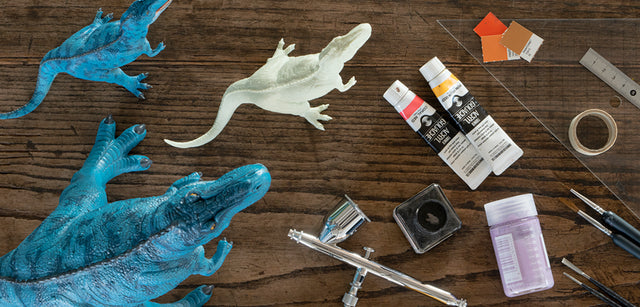
- I aimed to capture every appealing feature of this fish. The body pattern was based on an ideal specimen envisioned by supervisor Toshiaki Igarashi. I reproduced the skull pattern sculpted into the head with enough accuracy to help identify the species. I also engraved a subtle lateral line into one row of the orderly, tile-like scales, visible on close inspection.
- We asked fish researcher Toshiaki Igarashi to supervise the series. What kinds of discussions did you have with him?
- We carefully refined the models based on feedback about both the overall impression and the accuracy of details. Because the presence and volume of a three-dimensional object cannot be conveyed through images alone, we discussed proportions, overall appearance, and the state of the fish being depicted. We also reviewed fine details and measurements, including scales and fin rays.
- Finally, please share your comments on the Ancient Fish series.
- The central concept is to capture the fish alive and swimming. We hope the models evoke a vivid scene, as if a moment of movement had been frozen in time. Pick one up and you can appreciate the details of the fish, from the sculpted head to the scales, as well as its satisfying volume. It is enjoyable both to display and to handle.
Supervisor Profile
Kazuyuki Mori(Kazuyuki Mori)
Natural history model artist.
His work is based on the concept of a “private tropical world.”sculpting、working across both three-dimensional and two-dimensional media,、and has held numerous solo and group exhibitions.。
He was responsible for the sculpting and Supervision of the Aqua Fish Mini Models.