





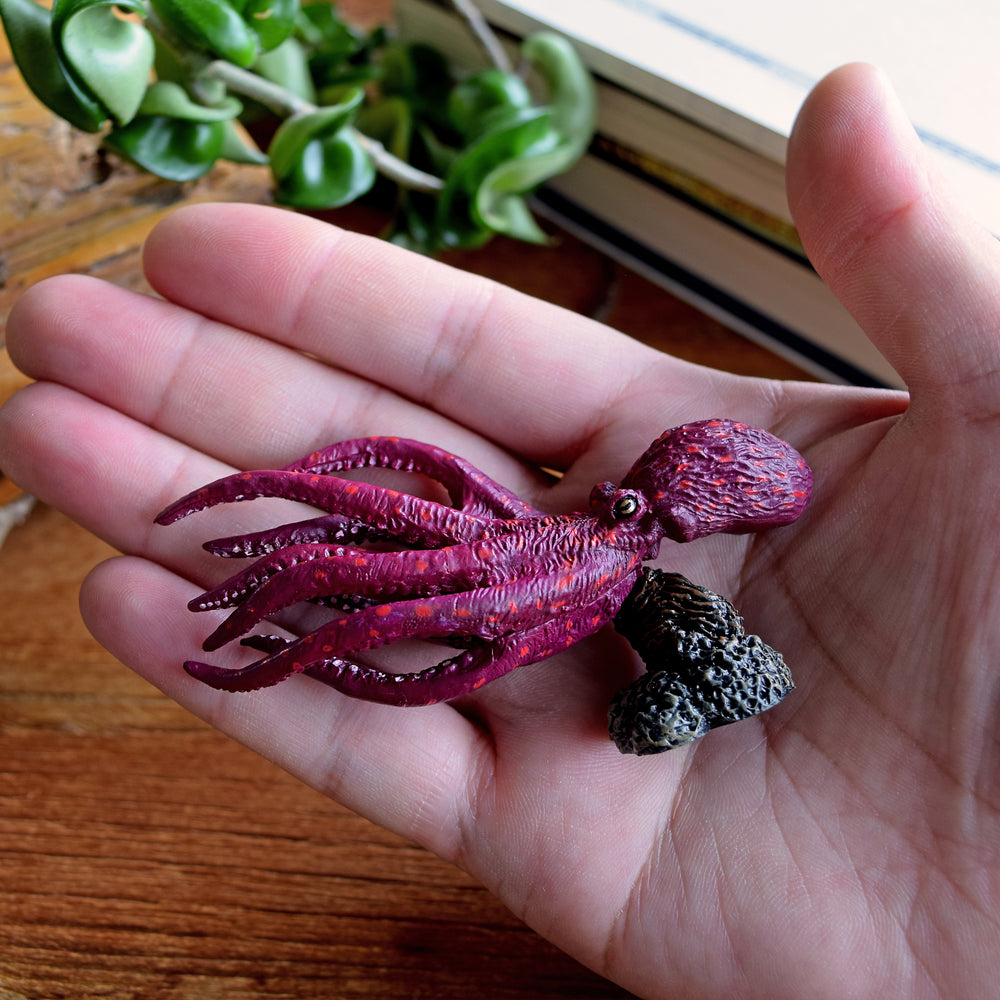

Palm-sized Aquatic Animal Figures
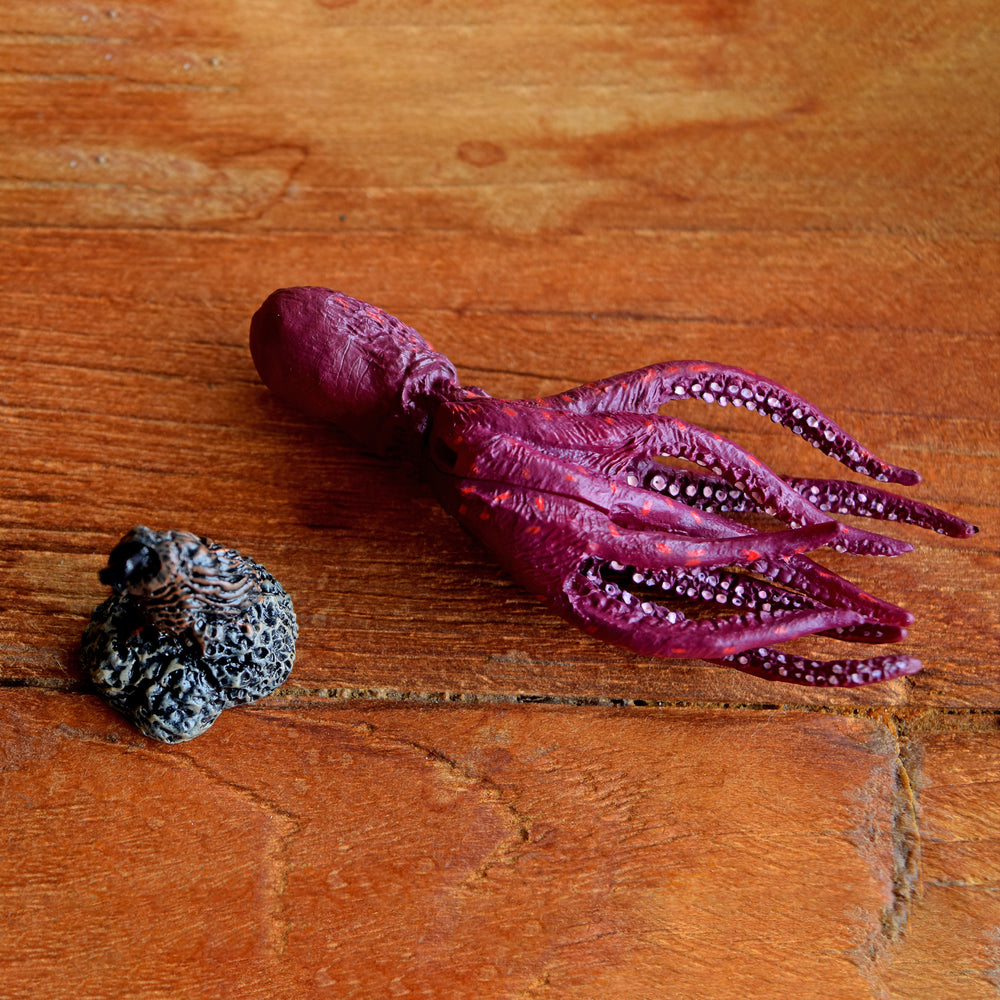
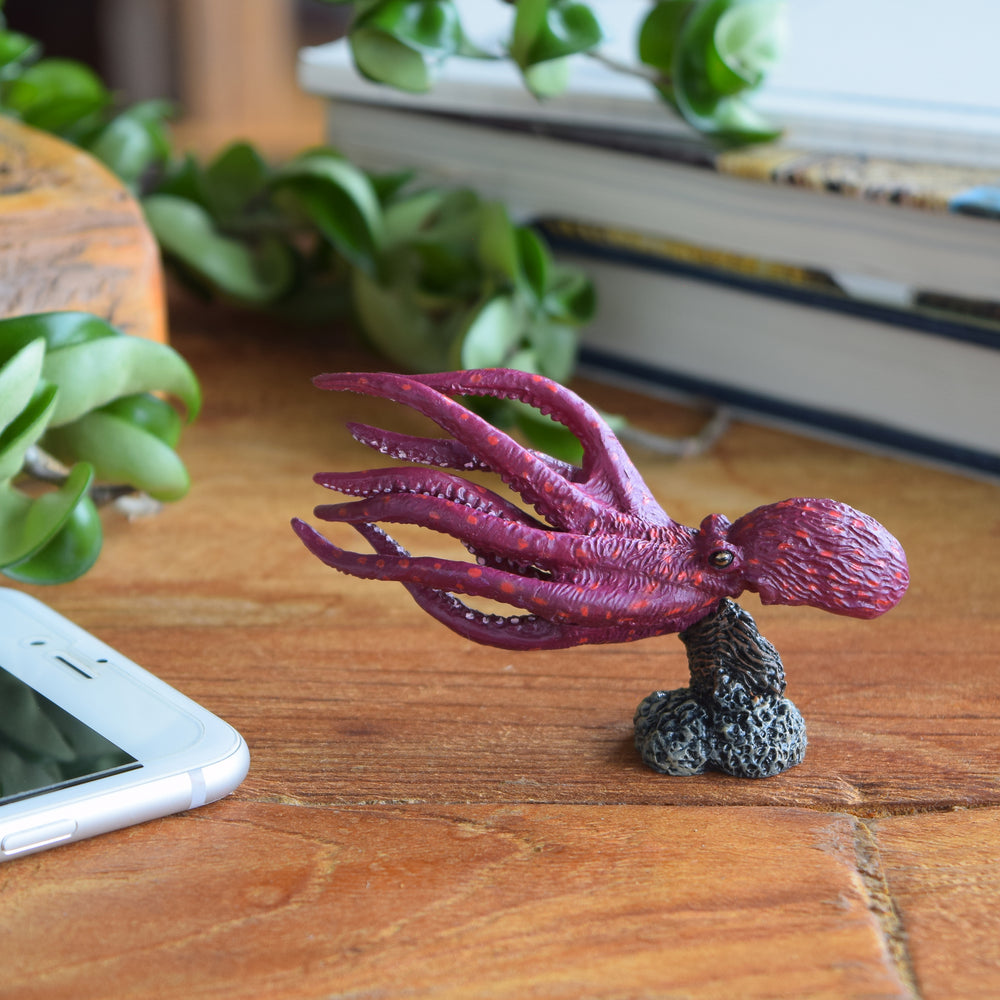
A PVC Mini Figure of the Giant Pacific Octopus, the world’s largest octopus, with the largest individuals reaching 9 m in total span. Its compact size makes it easy to display on a desk or shelf. An information card is included.
North Pacific Giant Octopus
Classification: Octopoda/Octopodidae/Enteroctopus
Size: Body lengthapproximately 300-500cm
Habitat: Northern Tohoku and the North Pacific, including Canada and Alaska
The Giant Pacific Octopus is the world’s largest octopus, with a large body and powerful suckers. The largest recorded individual had a total span of 9.1 m, and it is also called the giant octopus. Its body is usually reddish brown but can change color to camouflage itself against rocks or sand. It prefers cold water and can live at considerable depths. Its strong, beak-like mouth can crack crab shells and mollusk shells, allowing it to tear and eat the flesh.
Interview with Supervisor Kazuyuki Mori
- The individuality of the many fish that give us the pleasure of observing, catching, and even eating them continues to fascinate us. The Aqua Fish Series, featuring aquatic animals such as these as its motifs, is a new addition to Favorite.
Moa supervised the sculpting and painting of this series. What do fish mean to you personally?
What concept did you use as the basis for sculpting the master models? - I find the appearance of animals living in nature extremely fascinating. Regardless of the series, expressing the beauty of wild animals through sculpture is the most important concept for me.
For this series in particular, my goal was to capture animals swimming beautifully, powerfully, and gracefully—in other words, to express them in motion. I believe I was able to capture beautiful moments of these animals in action, as if they had been cut from a photograph. - The diverse individuality of the animals can also be seen in the paintwork. What kinds of individual animals did you have in mind?
- As mentioned above, the figures represent fish living in the wild.
For details, please refer to the description of each species. I used as references the stages of each fish’s life that I consider particularly distinctive and beautiful. As a result, most of the models are based on mature forms or mature individuals found in nature. From the perspective of a viewer, I imagined specimens that would make me happy to encounter. Perhaps this is somewhat subjective, but they represent an ideal of how I would like them to be. - What are the highlights of the Giant Pacific Octopus Mini Model, and what would you like people to notice?
- It is a cool animal! Sculpted figures of octopuses in a swimming pose are rare, so I was glad to have the chance to try it. I am personally very happy with the result.
I approached it as the opposite of the Bigfin Reef Squid, emphasizing asymmetry, power, and an eerie quality.
The relationship with the base creates a floating effect, making it an interesting three-dimensional piece to display. - As a palm-sized figure series, these models can be easily displayed anywhere and enjoyed in a variety of settings. Do you have any recommended display methods or presentation ideas?
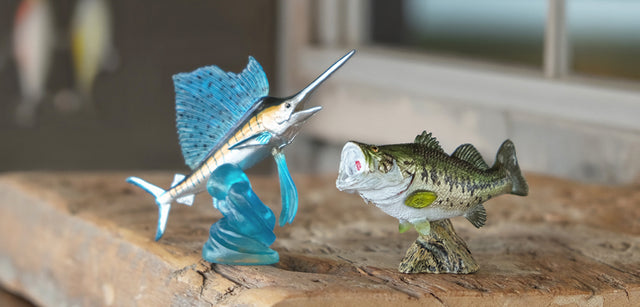
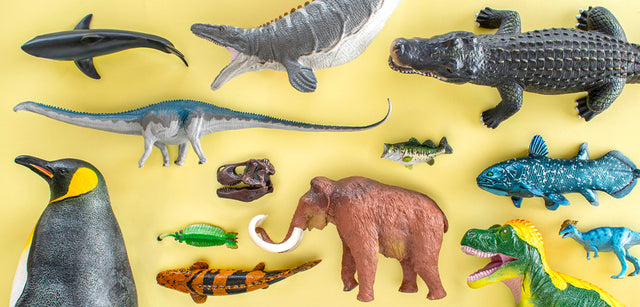
- I currently have the entire series lined up in front of me, and it looks spectacular. Since the models are compact and we paid particular attention to the design of their bases, they look especially good when many different species are displayed together.
It could also be fun to place natural objects such as driftwood or coral beside them, or display them near houseplants.
There are souvenirs from overseas featuring glass bowls placed on driftwood, which have become easier to find in Japan as well. I like placing fish figures beside them. It creates a very nice atmosphere. - Are there any fish species you would like to create for the Aqua Fish Series in the future?
- There are far too many! (laughs)
Although it is called the Aqua Fish Series, it is broad enough to potentially include animals other than fish. While expanding the fish lineup, I would also like to create other animals. There may even be room for deep-sea creatures... It is exciting to think about!
If I had to choose one, perhaps a lionfish or one of its relatives. I have liked them for a long time and have even kept them before.
If I were to choose something other than fish, how about a crocodile? This series mainly depicts animals swimming, so a sculpted figure of a swimming crocodile would be quite unusual. I think there would be many people who would want one.
Supervisor Profile
Kazuyuki Mori(Kazuyuki Mori)
Natural history model artist.
His work is based on the concept of a “private tropical world.”sculpting、working across both three-dimensional and two-dimensional media,、and has held numerous solo and group exhibitions.。
He was responsible for the sculpting and Supervision of the Aqua Fish Mini Models.