






Collectible Dinosaur Figures Made with Soft Material
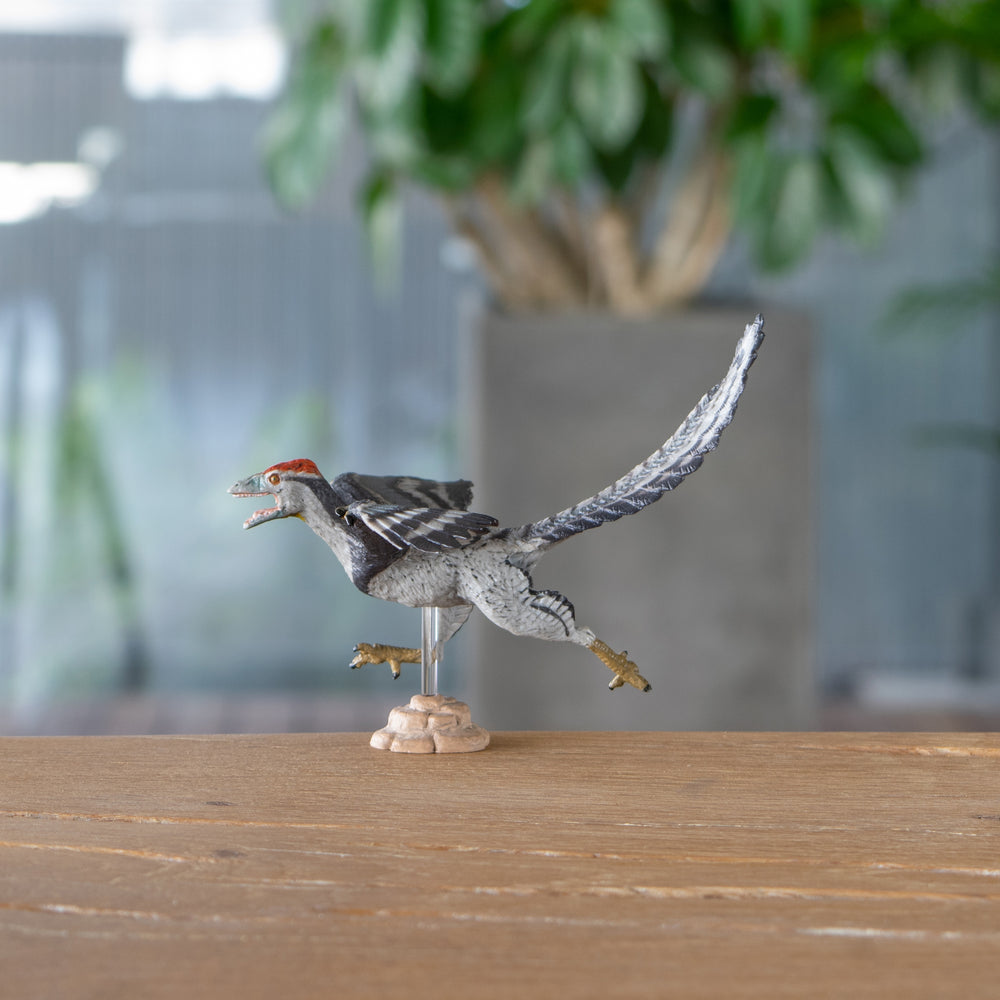
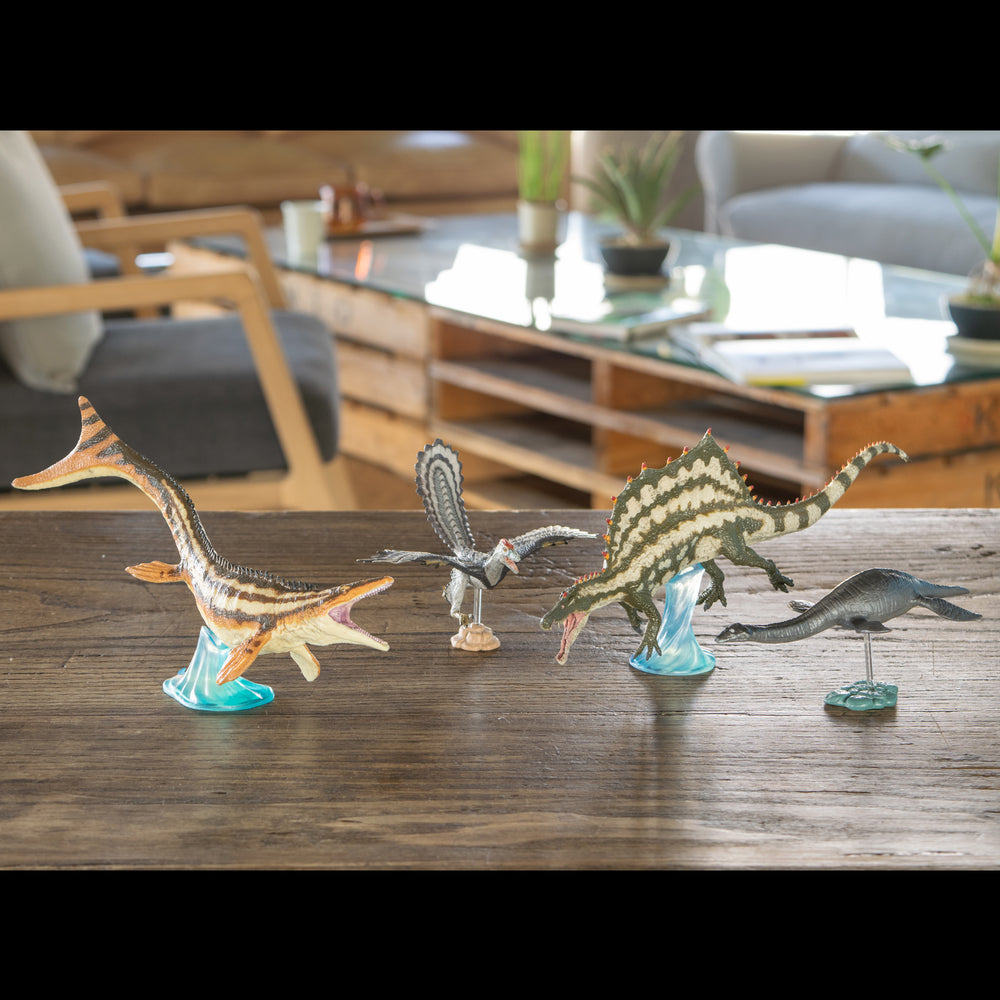
A PVC figure of Archaeopteryx, a primitive bird that combined features of theropod dinosaurs and modern birds. Its collectible size makes it enjoyable both for play and display.
Archaeopteryx
Classification: Avialae/Archaeopterygiformes/Archaeopterygidae
Size: Total length30〜50centimeters
Period: Late Jurassic
Archaeopteryx was a primitive bird that combined bird-like features, such as feathers and flight feathers covering the body, with theropod dinosaur features, including sharp teeth, clawed forelimbs, and a long bony tail. However, it is considered closer to reptiles in evolutionary terms and is not thought to be a direct ancestor of modern birds. Because its breastbone was not well developed, it probably could not take off as modern birds do; instead, it may have run along the ground using its strong legs before launching into the air.
Interview with Supervisor Kazunari Araki
- Archaeopteryx was long considered the most primitive bird. What are your impressions of it?
- Since my childhood, Archaeopteryx has been one of the iconic extinct animals featured in encyclopedias and textbooks, and an important fossil linking reptiles and birds. Recent proposals that it may have been a small feathered dinosaur rather than a true bird make it even more fascinating.
- When sculpting Archaeopteryx, which combines dinosaur and bird features, the style and pose depend on whether you emphasize its dinosaur-like or bird-like traits. The pose was specified for this model, so I leaned toward a bird-like appearance. The wings were the most difficult part to represent. Since it also has a long tail unlike modern birds, I made the tail feathers large.
- When sculpting Archaeopteryx, the style and pose depend on whether you emphasize its dinosaur-like or bird-like traits. The pose was specified for this model, so I leaned toward a bird-like appearance. The wings were the most difficult part to represent. Since it also has a long tail unlike modern birds, I made the tail feathers large.
- There are different hypotheses about whether Archaeopteryx lived mainly in trees or on the ground. What kind of lifestyle did you envision when sculpting this Soft Model?
- I imagined this model as a ground-dwelling animal running into the wind with its wings spread before taking off. Since its chest muscles were not well developed, it likely glided rather than flying with powerful wingbeats.
- A study suggested that Archaeopteryx’s feathers may have been black. Was this finding reflected in the paintwork of the Archaeopteryx Soft Model?
- A study a few years ago proposed that its feathers were black, so I incorporated that idea. An entirely black body would look too much like a crow, so I added gray, white stripes, and red coloring on the head for variation.
- Finally, could you share your comments on this model?
- If we think of Archaeopteryx as a dinosaur, it opens up the possibility of imagining the colors and patterns of feathered dinosaurs. Perhaps it had even more colorful markings. Consider this model as one possible answer to the many mysteries surrounding feathered dinosaurs.
Supervisor Profile
Kazunari Araki
One of Japan's leading dinosaur model artists, he creates dinosaur reconstruction models for natural history museums and master models for dinosaur encyclopedias and other publications.