





Collectible figures of ancient fish made with soft material
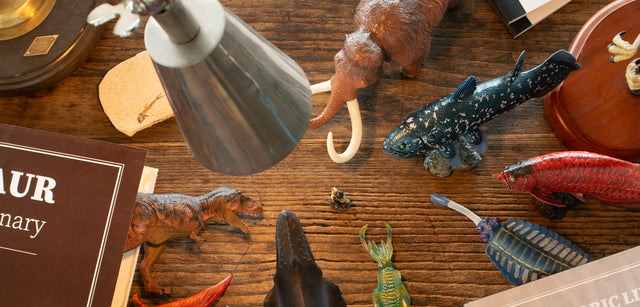
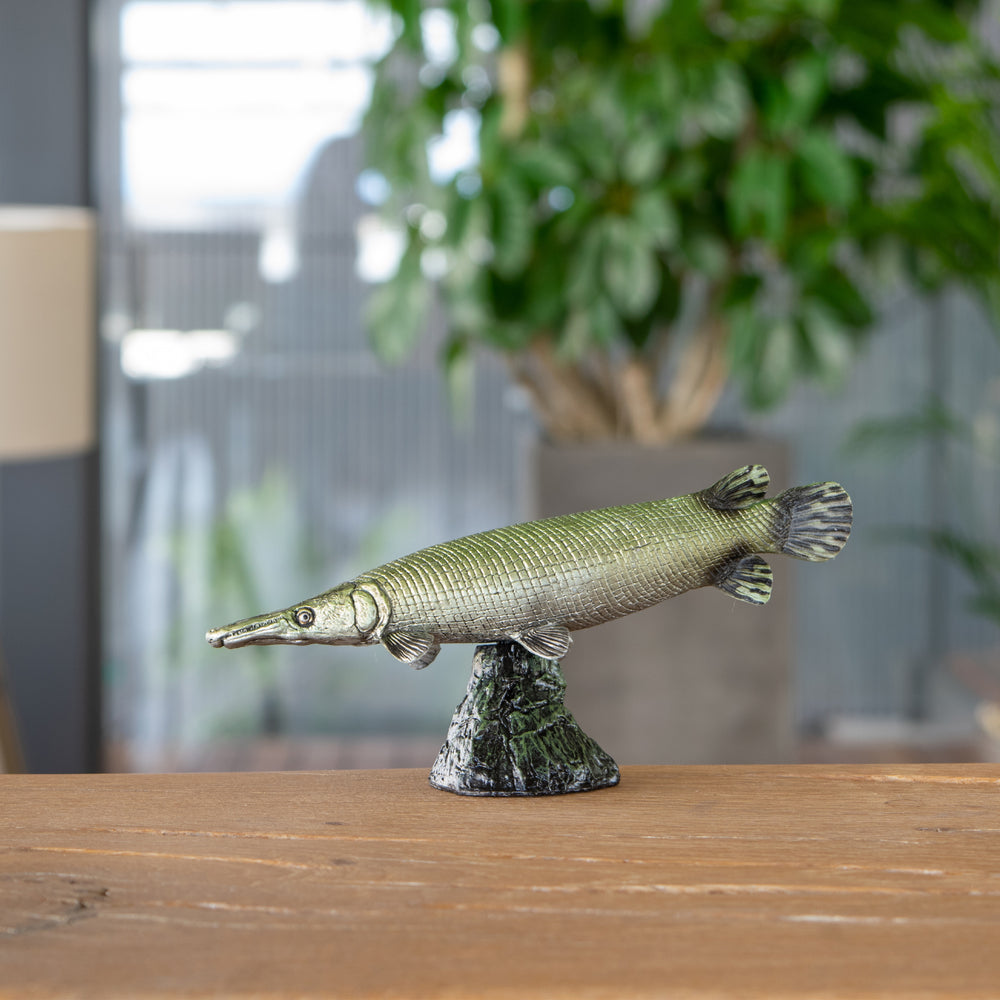
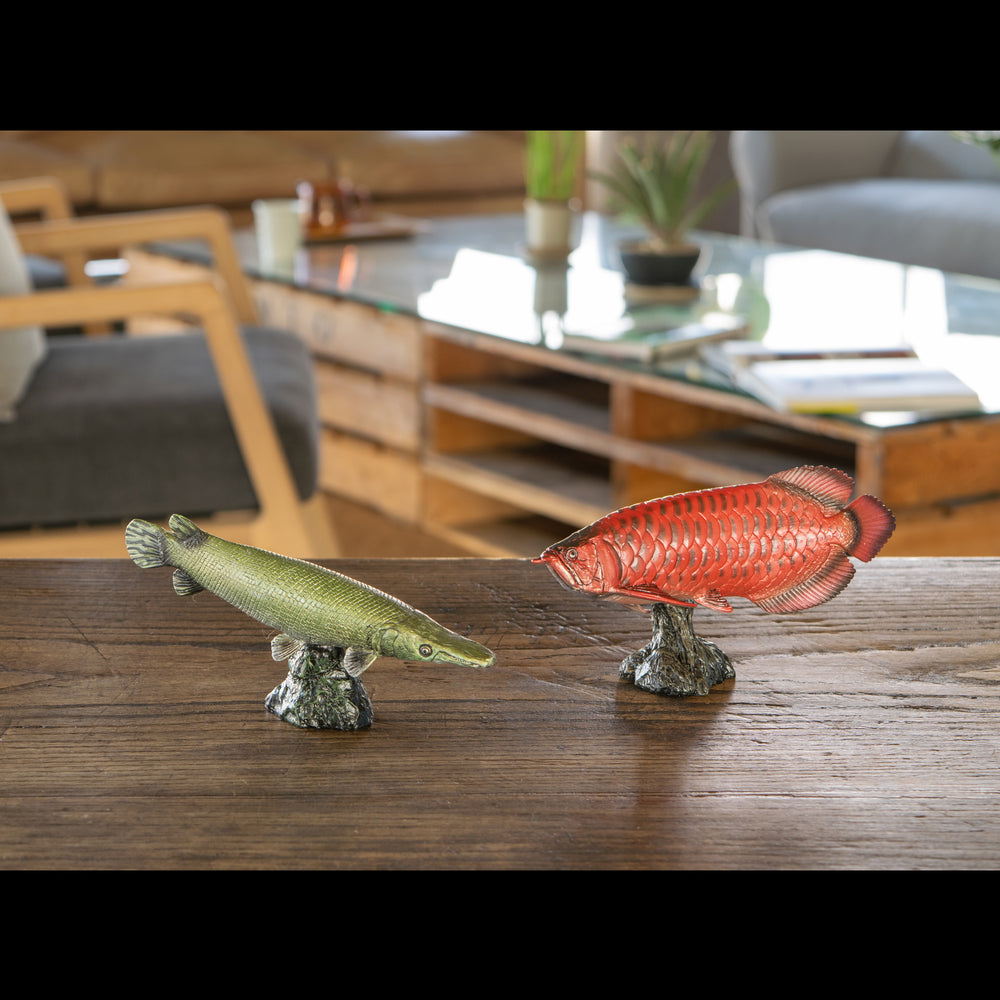
A PVC figure of the Cuban Gar (Manjuari), a popular gar species native to Cuba. Its collectible size makes it enjoyable both for play and display.
Cuban Gar/ManjuariCuban gar
Classification: Lepisosteiformes/Lepisosteidae/Atractosteinae
Size: Body length approximately 2meters
Habitat: Rivers and lakes of western Cuba and the Isle of Youth
The Cuban Gar is often called a “living fossil” because its appearance has changed little over roughly 100 million years. It is also known as “Manjuari,” a name from an Indigenous Cuban language meaning “many teeth.” Its protruding jaws are densely lined with teeth, and its body is covered in hard, diamond-shaped scales, a primitive feature of bony fish. Among gars, it has the broadest snout. In Cuba, its flesh is used as food.
Interview with Supervisor Kazuyuki Mori
- Please tell us about the appeal of the Asian Arowana (Red Dragon) and Cuban Gar (Manjuari), the latest additions to the Ancient Fish series.
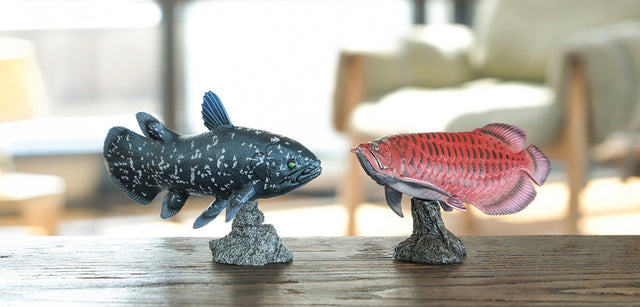
- The Asian Arowana is one of the most popular ornamental fish commonly categorized as an “ancient fish.” Its imposing face and large scales, reminiscent of a carp streamer, have earned it the nickname “dragon fish.” Asian Arowanas also come in a range of colors, including red, blue, gold, and green, making both choosing and keeping them part of their appeal.
Its imposing face and large scales, reminiscent of carp streamers, have earned the Asian Arowana the nickname “dragon fish.” Asian Arowanas come in a range of colors, including red, blue, gold, and green, and the pleasure of choosing and raising a particular fish contributes to their popularity as aquarium pets.
One of the most popular varieties is the red Asian Arowana known as the Red Dragon. The more intensely red its body, the rarer and more prized it becomes, and its majestic appearance lives up to the name.
As its name suggests, the Cuban Gar is a gar species native to Cuba, where it is known as “manjuari.” Although the name was familiar to enthusiasts, the fish was long unavailable in Japan, making it a coveted species among aquarium hobbyists interested in ancient fish.
Although it is smaller than the alligator gar, the largest gar species, the Cuban Gar can still grow to around 2 m. Its distinctive olive-green sheen and broad, protruding jaws set it apart. In most gars, the jaws are widest at the base and taper toward the tip, whereas the Cuban Gar’s jaws widen outward before gradually narrowing, creating a duck-like silhouette.
Its hard, tile-like ganoid scales shimmer green, and its formidable face gives it the appearance of an armored creature from prehistoric times. - There are many species of Asian Arowana and gar. What led you to choose the Asian Arowana (Red Dragon) and Cuban Gar (Manjuari)?
- I felt that the Asian Arowana was essential for a series called Ancient Fish.
Asian Arowanas are generally divided into four species, each with distinctive and appealing features, so choosing just one was difficult. I selected the Red Arowana, the variety most closely associated with the name. Its coloration presented a challenge, but I think the result is attractive.
Gar species are also essential to a series built around the concept of ancient fish, so the Cuban Gar was a natural choice.
Several candidates were considered, but I chose the Manjuari because I felt its sculptural features would be especially appealing. If the Asian Arowana is a model to enjoy for its vivid color, the Manjuari is one whose sculptural qualities can be appreciated from every angle. - You were responsible for creating the prototypes. What concepts guided the development of each model?
- For both models, I aimed to create specimens so appealing that I would want to own them if they existed in real life. For the Asian Arowana, body shape was especially important. It needed to look healthy and attractive, like a fish living in the wild. The spoon-shaped head and raised back had to be distinctive without looking unnatural, and I also paid attention to the differences between the Red Arowana and other Asian Arowanas. The Red Arowana has a relatively small head and long, flowing tail fins. For the Manjuari, I focused on its unique jaw shape and shimmering scales.
- Finally, could you share your thoughts on the newly added Asian Arowana (Red Dragon) and Cuban Gar (Manjuari) Soft Models?
- These models are enjoyable both on display and in the hand. From a distance, they evoke the graceful motion of swimming fish; when picked up, they feel like three-dimensional encyclopedias, with detailed information captured in the sculpted forms. I hope people will keep them nearby and enjoy them for a long time.
Supervisor Profile
Kazuyuki Mori(Kazuyuki Mori)
Natural history model artist.
His work is based on the concept of a “private tropical world.”sculpting、working across both three-dimensional and two-dimensional media,、and has held numerous solo and group exhibitions.。
He was responsible for the sculpting and Supervision of the Aqua Fish Mini Models.