

Vol. 85 Compiling a Bibliography of Translated Editions of "Journey to the Center of the Earth"
This title, needless to say, is taken from the drama "Fune wo Amu" (The Great Passage) which aired on NHK until last month, and which I watched because of the lead actress, Elaiza Ikeda. Elaiza has gone through high school suffering from communication disorders and teasing psychics, then became an underground boxer, rose to become Doronjo-sama, and even time-leaped to become a diva on Gunkanjima or was tossed about by a casual LOVE alien in Onomichi, truly working across time. Last month, she was a charming actress diligently working on dictionary compilation at the Genbu Shobo publishing house... Oh, this phrasing must have inadvertently been influenced by the new book I'm currently reading by Dr. Kawakami "Ornithologist" Kazuto, titled "Half of Ornithologists Are Not Made of Ornithology."
Anyway, thanks to diligently watching "Fune wo Amu," I unexpectedly found a dinosaur gaffe, so here's my report.
Around the middle of episode 4, there's a scene in the Genbu Shobo editorial office where the new employee, Elaiza, is being lectured on illustration layout. There, as an example, in the "A" section of the "Genbu Learning Japanese Dictionary," there was an illustration of an "Apatosaurus." I paused the playback and read the description, which was as follows:
Apatosaurus [Latin Apatosaurus]
A giant dinosaur that flourished from the Jurassic to the Cretaceous periods of the Mesozoic Era. It is estimated to be over 20 meters long and weigh approximately 20-40 tons. It has a long neck and tail, a small head, and thick limbs. Herbivorous. Brontosaurus is the second name given to this fossil. Thunder Lizard.
Well, it's not entirely wrong, but terms like "Saurischia" or "Sauropoda" are missing, and since the dictionary is set to be published around 2017, "herbivorous" seems questionable. The final explanation about Brontosaurus would likely be incomprehensible to the general public who would look up Apatosaurus in a Japanese dictionary. Moreover, the illustration shows a very昭和 (Showa-era) depiction of its tail dragging and curling, which is a serious matter concerning the reputation of Genbu Shobo. If a dictionary like this were actually released in the 21st century, dinosaur fans would not stay silent!
*Just in case, I skimmed through all the current Japanese dictionaries at a bookstore, but Apatosaurus wasn't listed anywhere.
It's about time to compile "Journey to the Center of the Earth." The explanations are simplified in dictionary style.
"Journey to the Center of the Earth Translated Works Catalog"
The prehistoric creatures that appear in the original version of this first-ever lost world novel by Jules Verne are un-fossilized bones of mastodons, dinotheriums, and megatheriums scattered in the mushroom forest. In the underground sea, they encounter ancient fish, ichthyosaurs, and plesiosaurs. After landing on the opposite shore, they meet herds of mastodons and giant ape-men. In addition, there are prehistoric creatures Axel dreams of on the raft and giant reptilian skeletons (species unknown) he once saw in a museum. Not a single dinosaur appears.
1885 "Hakuan Kyōki: Chitei Ryokō" (Startling Tale: Journey to the Center of the Earth) Kyushundo
Miki Aika, Takasu Harujiro (trans.)
*See Shin Hihokan Vol. 6.
This book contains unfamiliar spellings such as "ichthyosaur" and "plesiosaur." According to Mr. Megumi Ito, a dinosaur researcher knowledgeable in osteology, a dinosaur book translator, and a current lecturer at Tokyo ECO Animal and Ocean College (Shin Hihokan Vol. 6), one of the translators, Harujiro Takasu, was a Russian translator, and since it was translated from a Russian version, it likely adopted Russian pronunciations.
1908 "Zendai Mimon: Chitei Sekai Ryokō" (Unprecedented: Journey to the Underworld) Hakubunkan
Mishima Sōsen (adaptation)
*Detailed introduction in Shin Hihokan Vol. 28.
1955 "Journey to the Center of the Earth" Kodansha, Murakami Keio (trans.)
Sekai Meisaku Zenshu (Collected World Masterpieces) 114
Juvenile. Paraphrased but mostly faithful to the original. Here, the museum skeleton is called a crocodile, and the sea monsters are fish-dragons and snake-headed dragons.
*Snake-headed dragon is a Japanese name coined by Dr. Matadiro Yokoyama. Dr. Yoshikazu Hasegawa's "kubinagaryu" (long-necked dragon, i.e., plesiosaur) was not conceived until 1970.
1957 "Journey to the Center of the Earth" Tokyo Sogensha
Ishikawa Yū, Kaku Hiroshi (illustrations)
Dai-ni-bu Sekai Shōnen Shōjo Bungaku Zenshu (Part Two Collected Works of World Boys' and Girls' Literature)
*Coupled with "Ōkentei no Okyaku-tachi" (Guests of the Yellow Dog Pavilion)
Juvenile. Axel is "I" but follows the original. The word "dinosaur" is used, and the frontispiece and illustrations are cartoony.
1959 "Journey to the Center of the Earth" Tomo Book Co.
Disney Feature Comics
Verne's Journey to the Center of the Earth by Mickey, Donald, and Pluto.
1959 "Chitei no Bōken" (Adventure Underground) Iwasaki Shoten, Eguchi Kiyoshi
Verne Bōken Meisaku Senshu (Verne Adventure Masterpiece Collection) 6
Juvenile. Uses "I" and greatly omits the first half, but the latter half is faithful. The cover features a mastodon, and it doesn't look underground at all. The museum skeleton is a dinosaur skeleton, and the sea monsters are fish-dragons and "dakei-ryu" (lizard-necked dragons).
1960 "Journey to the Center of the Earth" Miura Kiyoshi, Shogakukan
Chūgakusei no Tomo Ichinen Furoku (Middle Schooler's Friend First Year Supplement)
A novelization of the 1959 film "Journey to the Center of the Earth," but it includes scenes omitted from the film, such as finding mastodon bones in the mushroom forest and the sea battle scene.
1960 "Journey to the Center of the Earth" Tokyo Sogensha
Ishikawa Yū, Kosaka Shigeru (illustrations)
Sekai Shōnen Shōjo Bungaku Zenshu (Collected Works of World Boys' and Girls' Literature) 21
The same translation as published in "Dai-ni-bu Sekai Shōnen Shōjo Bungaku Zenshu" (Part Two Collected Works of World Boys' and Girls' Literature) in 1957. The frontispiece and illustrations have been changed.
1963 "Journey to the Center of the Earth" Murakami Tetsuo, Hayakawa Shobo
Hayakawa S-F Series
Faithful to the original, it does not use the term "dinosaur," referring to them as "strange reptiles" and "ancient lizards" in the dream sequence. The sea monsters are Ichthyosaurus (fish-lizard) and Plesiosaurus (snake-necked lizard).
1964 "Chitei no Tanken" (Exploration of the Underground) Honaga Sadao, Gakken
Shōnen Shōjo Verne Kagaku Meisaku Zenshu (Collected Works of Boys' and Girls' Verne Science Masterpieces)
The scene where Axel dreams on the raft is largely cut, and instead, explanations of dinosaurs are inserted. Also includes "Loch Ness Monster," "Exploration of Three Caves," and "Let's Dig the Earth."
1965 "Journey to the Center of the Earth" Shiraki Shigeru, Obunsha
Chunijidai (Middle School Era) December issue, 4th supplement
A heavily abridged version, lacking the display of the cipher, the bones of ancient creatures scattered in the mushroom forest, and the scene where Axel dreams on the raft.
1966 "Journey to the Center of the Earth" Kin no Hoshi Sha
Shinoda Shuichi, Taga Tadashi (illustrations) Hiragana Sekai Meisaku (Hiragana World Masterpieces)
Later reissued by the same company as "Chitei Ryoko" (1971) and "Chitei no Boken" (1975), but this edition is the only one with a mastodon frontispiece.
The sea battle is between a "gyoryu" (fish-dragon) and a "chokeiryu" (long-necked dragon).
*Unfortunately, the cover is missing.
1966 "Journey to the Center of the Earth" Ishikawa Yū, Kadokawa Shoten
Kadokawa Bunko
Almost identical to the juvenile edition published by Sogen-sha in '57 and '60. "Boku" (I) becomes "watashi" (I), and the number of kanji characters has increased. They are referred to as dinosaurs, ichthyosaurs (fish-dragons), and plesiosaurs (snake-necked dragons) respectively.
1966 "Chitei Tanken" (Underground Exploration) Kume Motoichi, Tanaami Keiichi (illustrations)
SF Sekai no Meisaku (SF World Masterpieces) 5
A boldly abridged juvenile edition. The illustrations are wonderfully pop.
1967 "Journey to the Center of the Earth" Shioya Taro (edited and compiled)
Kaiseisha Meisaku Bōken Zenshu (Collected Adventure Masterpieces) 14
A juvenile edition with a bold arrangement, narrated in the third person. Axel is referred to as "Axel-kun." The frontispiece depicts a sea battle that unmistakably looks like a sauropod vs. a mosasaur.
1968 "Chitei no Bōken" (Adventure Underground) Shueisha
Kawamura Katsumi, Takise Hiroshi (illustrations) Verne Zenshu (Collected Works of Verne) 8
A straightforward translation. The term "dinosaur" appears only once. The illustrations (copied from the original) do not include a sea combat scene; instead, the frontispiece features a terrible fish-dragon with hands (!).
1968 "Chitei no Tanken" (Underground Exploration) Kaiseisha
Tsuji Akira, Tsukasa Osamu (illustrations) Verne Meisaku Zenshu (Collected Masterpieces of Verne) 6
Juvenile. Well-organized. The frontispiece and illustrations are surreal and excellent. Includes a commentary "Birth of Earth and Life" by Masahiro Omori at the end.
1968 "Journey to the Center of the Earth" Tokyo Sogensha
Kubota Hannya, Minamura Takayuki (illustrations) Sogen Mystery Bunko
The translation is orthodox. The cover and illustrations, modeled after the original, are by Takayuki Minamura. Axel's dream sequence describes "reptiles," but suddenly, a double-page spread of dinosaur illustrations in a children's encyclopedia style appears. And it's an Allo vs. Tricera!
1969 "Daichitei" (Great Underground) Kodansha
Otomo Shoji (planning/composition), Kuwana Kiyoichi
Weekly Shonen Magazine New Year's Special Issue
*See Shin Hihokan Vol. 84 (previous issue)
1969 "Chitei no Tanken" (Underground Exploration) Honaga Sadao, Gakken
Shōnen Shōjo Verne Kagaku Meisaku (Boys' and Girls' Verne Science Masterpieces) 3
A revised edition of the 1964 first edition, with changes to the cover and table of contents design.
Image 1
Book covers: Meiji era - 1960s

1970 "Journey to the Center of the Earth" (included in Sekai SF Zenshu 1)
Murakami Tetsuo, Hayakawa Shobo
Coupled with "Twenty Thousand Leagues Under the Sea," originally published in the Hayakawa SF Series (1963).
1970 "Chitei no Bōken" (Adventure Underground) Shueisha, Kawamura Katsumi
Junior Ban Sekai no SF (Junior Edition World SF)
Unfortunately, the illustration of the fish-dragon versus plesiosaur battle scene mistakenly depicts both as plesiosaurs.
1971 "Chitei Ryoko" (Underground Journey) Kin no Hoshi Sha
Shinoda Shuichi, Taga Tadashi (illustrations) Yonen-ban Sekai no Meisaku (Children's Edition World Masterpieces)
The same as "Hiragana Sekai Meisaku: Chitei Ryoko" published by the same company in April 1966.
1972 "Journey to the Center of the Earth" Chūō Kōron Sha, Katō Haruhisa
Shinshū Sekai no Bungaku (New Collection of World Literature) 20
Uses copperplate engravings from the first edition for illustrations. The printing is very beautiful. The flashback scene features "dinosaurs." In the sea, fish-dragons (Ichthyosaurus) and snake-necked dragons (Plesiosaurus) appear, coupled with "The Southern Cross."
1973 "Chitei Tanken" (Underground Exploration) Shueisha
Nasu Tatsuzō (text), Kubo Masao (illustrations)
Haha to Ko no Meisaku Dōwa (Classic Fairy Tales for Mothers and Children) 31
A children's story supervised by Yasunari Kawabata and others. Axel is a child in shorts. The story follows the original.
1973 "Journey to the Center of the Earth: Journey to the Center of the Earth" Kodansha, Eguchi Kiyoshi, Kodansha Bunko
This is a new translation, different from the juvenile edition published in 1959. The museum skeleton is a reptile, and the plesiosaur is consistently called a "dakei-ryu" (snake-necked dragon). The end of the book includes a short biography and chronology of Jules Verne.
1974 "Journey to the Center of the Earth" Shioya Taro (edited and compiled)
Kaiseisha Bōken Tantei Series (Adventure Detective Series)
A re-designed new edition of the "Meisaku Bōken Zenshu" (Collected Adventure Masterpieces) published in '67. The color illustration pages from the latter half have been cut.
1975 "Chitei Tanken" Kin no Hoshi Sha
Shinoda Shuichi, Taga Tadashi (illustrations) Yōnen-ban Sekai no Meisaku (Children's Edition World Masterpieces)
A revised and retitled version of "Chitei Ryoko" published by the same company in '66 and "Chitei no Boken" in '71.
1976 "Chitei Tanken" (Underground Exploration) Iwasaki Shoten
Kume Motoichi, Kotsuki Aya (illustrations)
SF Kodomo Toshokan (SF Children's Library) 5
A reissue of the SF Sekai no Meisaku series from 1966. The background color of the title changed from red to yellow. (Not owned)
1976 "Chitei Tairiku Hakken" (Discovery of the Underground Continent) (contained in "Chitei Dai Tanken" (Great Underground Exploration))
Shogakukan
Saeki Seiichi (composition), Hosoi Yuji (graphic novel)
Shogakukan no Gakushu Comics (Shogakukan Learning Comics)
*See Shin Hihokan Vol. 84 (previous issue)
1976 "Journey to the Center of the Earth" Obunsha, Kaneko Hiroshi
Obunsha Bunko
The illustrations are from the original. In the museum, reptiles are mentioned. In the sea, ichthyosaurs (fish-dragons) and plesiosaurs (snake-necked dragons) are used.
★ The commentary at the end of the book contains a surprising statement that four years before "Hakuan Kyōki: Chitei Ryokō," a person named Nobuyoshi Oda translated it under the title "Chichu Kikō," but it was never published. There is no trace of this online either.
1978 "Journey to the Center of the Earth" Shufu no Tomo-sha
Tezuka Production (graphic novel)
TOMO Comics Masterpiece Mystery
The story follows the original, hitting all the key points. Gräuben also joins the expedition. T-Rex makes a special appearance.
1992 "The Day I Trembled at 'Journey to the Center of the Earth'" (included in Shonen Shojo Shosetsu Best 100)
Bungeishunju, Murata Kiyoko
Ranking of 103 memorable books, as told by celebrities from various fields. "Journey to the Center of the Earth" is ranked 39th, and an essay by author Kiyoko Murata is also included.
1993 "Journey to the Center of the Earth" Tokyo Sogensha, Kubota Hannya
Sogen SF Bunko
Moved from Sogen Mystery Bunko (published in 1968) to Sogen SF Bunko, and the cover was updated.
1993 "Journey to the Center of the Earth" Kaiseisha
Ishikawa Yū, Ishikawa Fumi
Kaiseisha Bunko Kan'yakuban Koten Series (Kaiseisha Bunko Complete Translation Classics Series)
Based on Ishikawa Yū's Sogen editions (57, 60) and Kadokawa Bunko edition (73), with additions by his daughter, Ishikawa Fumi.
1997 "Journey to the Center of the Earth" Iwanami Shoten, Asahina Kōji
Iwanami Bunko
A triumph with all original illustrations included. There is an alternate version of the fish-dragon vs. plesiosaur illustration in the frontispiece.
Image 2
Book covers: 1970s - 1990s

2004 "Chitei Tanken" (Underground Exploration) Iwasaki Shoten
Kume Motoichi, Kototsuki Aya (illustrations)
Bōken Fantasy Meisaku-sen (Adventure Fantasy Masterpiece Selection) 11
Juvenile. Originally from the SF Sekai no Meisaku series in 1966. It's a great shame that the unique and pop illustrations of that time have been replaced with modern comic-style illustrations.
2008 "Journey to the 'Center of the Earth'"
Nihon Jules Verne Kenkyūkai (Japan Jules Verne Research Society)
Excelsior! Vol. 2
The journal of the Japan Jules Verne Research Society, the first authentic social group for Jules Verne enthusiasts and researchers. The special feature on "Journey to the Center of the Earth" is very thorough.
2008 "Journey to the Center of the Earth" Kadokawa Group Publishing, Ishikawa Yū, Kadokawa Bunko
First published in 1966. A re-designed edition released to coincide with the movie "Journey to the Center of the Earth."
2008 "Center of the Earth: Journey to the Underworld" Media Factory
Mark Levin (author), Naoko Kawai (translator)
Children's novelization of the movie.
Includes movie stills and features the giant dinosaur "Gigantosaurus."
2013 "Journey to the Center of the Earth" Kobunsha, Takano Yu
Kobunsha Koten Shinyaku Bunko (Kobunsha Classical New Translation Library)
Easy to read with modern phrasing and detailed annotations, but lacks the charm of a classic. Also, the habit of Professor Lidenbrock ending his sentences with "ja" is bothersome. The skeleton in the flashback is a "giant reptile."
Uses original illustrations.
2016 "Journey to the Center of the Earth 1"
KADOKAWA/Enterbrain
Kurazono Norihiko, Beam Comics
A complete manga adaptation of Verne's classic. Serialized from the October 2015 issue of Comic Beam magazine and then compiled into a single volume. No prehistoric creatures appear in Volume 1 yet.
2016 "Journey to the Center of the Earth 2"
KADOKAWA/Enterbrain
Kurazono Norihiko, Beam Comics
Volume 2 features bones of mastodons and other creatures in the mushroom forest, and prehistoric creatures such as pterodactyls that Axel dreams of on the raft.
2016 "Journey to the Center of the Earth 3"
KADOKAWA/Enterbrain
Kurazono Norihiko, Beam Comics
Volume 3 finally introduces the famous scene in Lidenbrock Sea. The dinosaur in the museum in the flashback scene has been corrected from a modern T-Rex (as in the magazine serialization) to a sauropod (Cetiosaurus?).
2016 "Journey to the Center of the Earth 4"
KADOKAWA/Enterbrain
Kurazono Norihiko, Beam Comics
The concluding volume. Prehistoric creatures such as mastodons and giant ape-men appear.
2018 "Journey to the Center of the Earth" Iwanami Shoten, Hiraoka Atsushi
Iwanami Shonen Bunko (Iwanami Juvenile Library)
Complete translation. The museum skeleton is a dinosaur.
Illustrations by Édouard Riou from the original edition are used.
Image 3
Book Covers, 2000s - Present

New Hihokan Vol. 28 has been released, adding about 10 new books, and with just one more known translated book, the collection will be complete! But I'm sure there are still many unknown "Journey to the Center of the Earth" books waiting to be discovered. I'm looking forward to it.
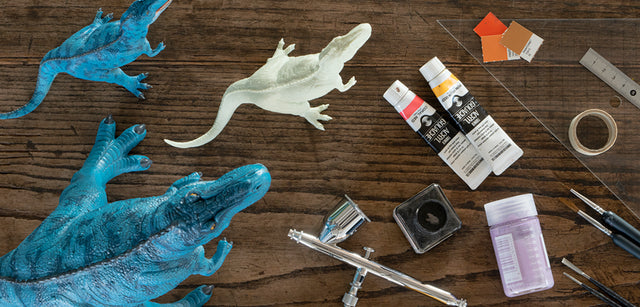
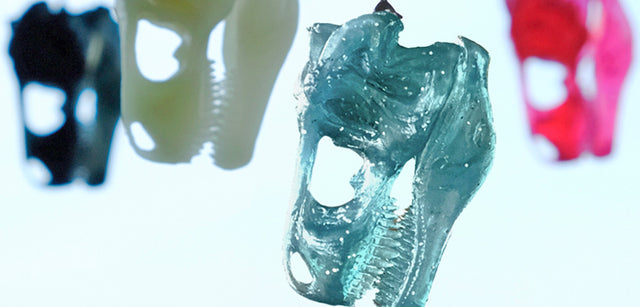
Well, the "Hakubutsu Festival" was held again this year. I was happy to purchase some wonderful new works from "Hasamic World" and "Takao Kiln," both of whom I've become familiar with (New Hihokan Vol.21/26/31/37/43/49/68/73/79) were as lively as ever.
Image 4
Hasamic's new works

Diplocaulus / Plesiosaurus / Edmontonia. All of them are wonderful! In particular, the Edmontonia is elaborately crafted, with the skeleton and osteoderms separated using different colored paper. Since it's framed, the limbs that aren't visible from above are omitted. The smaller works are Achelousaurus, a ceratopsian I regrettably didn't know about, and Rolffosteus, a placoderm. Both are too obscure.
Image 5
Takao-gama's new works and "Mushussu"

An Iguanodon and Ankylosaurus with a nice baked color (it was apparently an accident), and in the foreground, ammonite fossil-shaped chopstick rests!
And then I found a "Mushussu" figure at the venue and impulse bought it due to its rarity. It's a work by 323 Studio. The Mushussu is an ancient Mesopotamian mythical creature said to be the prototype of dragons. A version with a slightly shorter neck can be seen on the Ishtar Gate - I asked the artist at the booth because it looked familiar, and they gave me a kind explanation. Once I heard that, I couldn't help but buy it.
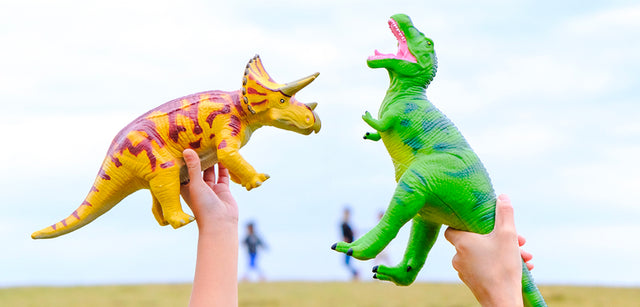
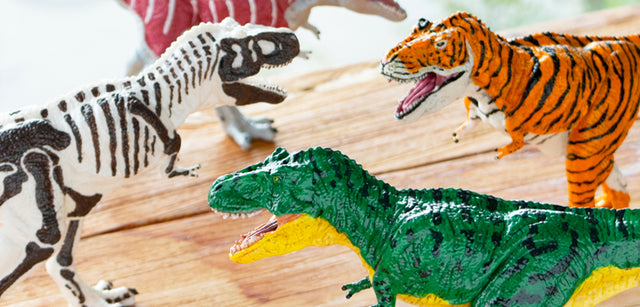
And finally, of course, this. Figures from the upcoming movie "Jurassic World: Rebirth." This time, countless figures, from mini-sized to colossal, have been released, but for now, I'll let myself off the hook with these...
Already, one corner of my room is covered from floor to ceiling with Jurassic figures.
Image 6

The figures in the top frame are Mattel products: the larger ones are Lab Attack T-Rex, Super Battle Attack Spinosaurus, Battle Action Mosasaurus, and Battle Action Quetzalcoatlus. All of them have a different design aesthetic than previous ones.
The smaller ones are part of the JP series of rare species that don't appear in the movies (perhaps game-exclusive?). From left:
Yuxisaurus (Yisisaurus)
* A newly discovered basal thyreophoran. If it had been released about half a year earlier, it could have been included in the cladogram from two posts ago...
Iani Smithi
* This is also a newly discovered species, and it seems to be the last survivor of the Iguanodon family, closely related to Tenontosaurus.
Torvoneustes
* A species of sea crocodile I've never heard of. It's apparently in the Metriorhynchidae family.
Tapejara and Inostrancevia
* Finally, familiar names appear, bringing a sigh of relief...
The bottom frame contains Ania figures. I've managed to complete the set for now.
There are many other figures, such as Mattel's Toys "R" Us exclusive 150cm Titanosaurus, the JP version of Planosaurus, and series bundled with cars from Matchbox. Furthermore, new high-quality Hammond Collection series figures, unrelated to this movie, are constantly being released, and I'm at my wit's end.
By the way, what exactly is the anomalous dinosaur Distortus Rex, which looks like it's possessed by a "Yokai Nupeppo" or "Ataro Dekoppachi"? I'm trying to avoid watching trailers so as not to be disappointed, so I only know about it from Mattel's figures.
I'm anxiously wondering if it will be a hybrid with a dolphin that emits killer sound waves from its melon head, as I eagerly await the release date.
One more movie topic. In the book "Half of an Ornithologist is Not Made of Ornithology" introduced at the beginning, the author recounts an episode where he was worried that the highly anticipated movie "Onsen Jaws" would finish its run while he was investigating an uninhabited island in Ogasawara and needed to return quickly. As expected of ornithologist Kazuto Kawakami! He certainly knows how to keep things interesting.
Many people know that there's a genre of movies called "bad shark movies," but "Onsen Jaws" is Japan's challenge to the countless American bad shark movies. I also watched it on WOWOW recently, and it was as absurd as I expected.
I enjoy absurd shark movies, but it seems to be in the nature of dinosaur fans to pick faults with absurd dinosaur movies...
This time, "Jurassic Reborn," produced by Asylum, a major company in this genre, is being distributed/screened in America, riding on the coattails of "Jurassic World: Rebirth." (Is its release in Japan undecided?)
I watched the trailer online, and it still had that B-movie vibe.
Next time, of course, will be a "Rebirth" special.
← Older Post Newer Post →