






Playable prehistoric creature figure made of soft material
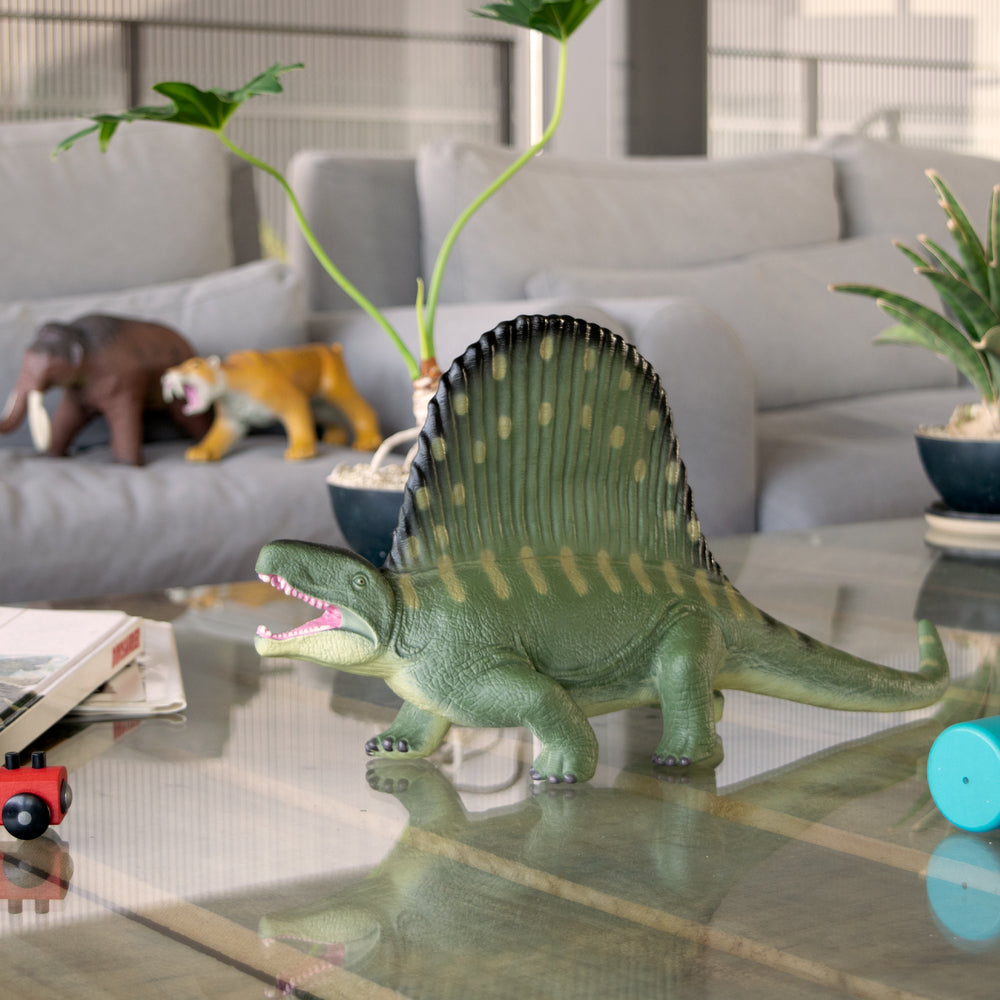
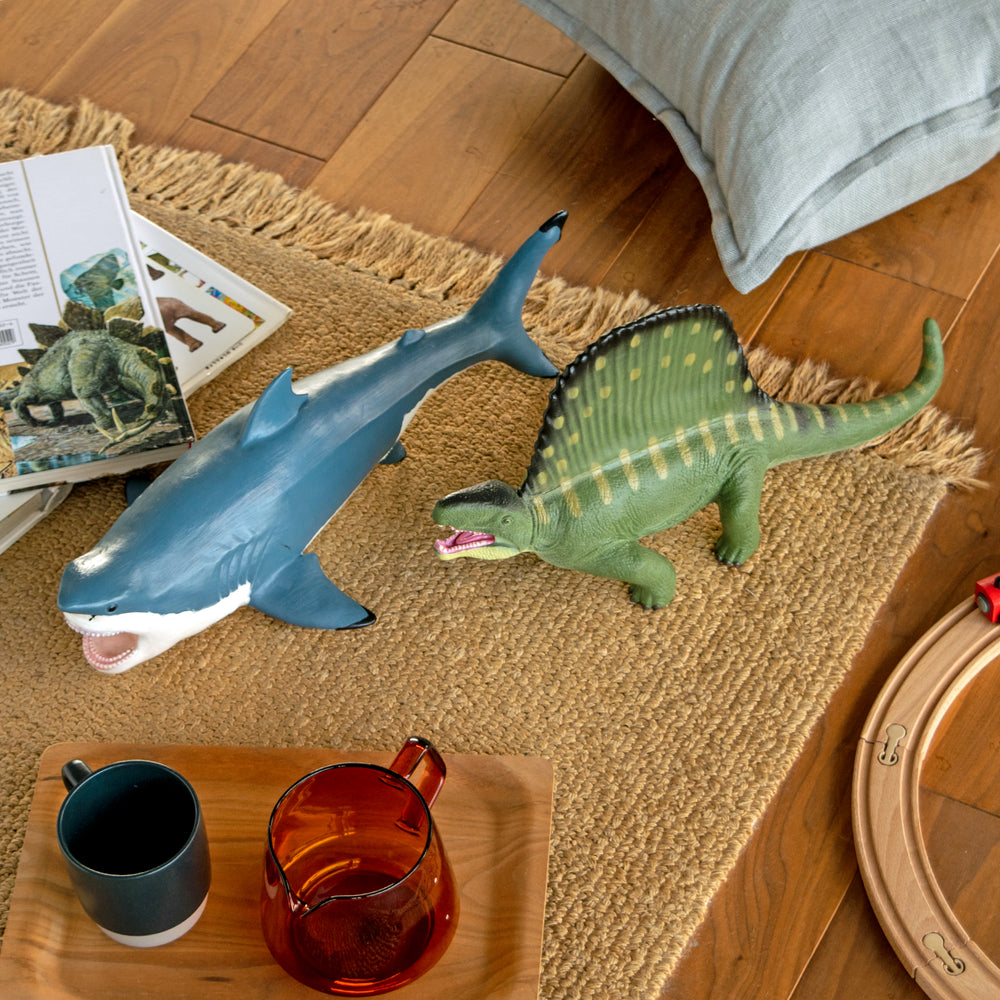
This is a vinyl figure of Dimetrodon, a prehistoric vertebrate (excluding dinosaurs) as well-known as mammoths and saber-toothed tigers. Made from materials safe for young children to touch, it can be played with safely in the living room or children's room.
*Some color specifications have been changed.
DimetrodonDimetrodon
Classification: Synapsida/Pelycosauria/Sphenacodontidae
Size: Approximately 3 meters in length
Period of habitat: Early Permian, Paleozoic Era
Dimetrodon was a large synapsid (also known as a mammal-like reptile) that lived approximately 280 million years ago in the Early Permian period. Its most distinctive feature was the sail on its back, which could reach up to 1 meter in height. This sail was not merely for display but also used for thermoregulation, allowing it to efficiently absorb sunlight in the cool morning and become active faster than other poikilothermic animals. It was also one of the first animals to possess sharp front teeth and large fangs, which, along with the development of jaw muscles, can be considered a step towards the evolution of mammals, where teeth vary in shape and size depending on their purpose.
Interview with Supervisor Hirokazu Tokugawa
- Dimetrodon, which lived in what is now North America during the Early Permian period, is now available as a soft model and a vinyl model. Please tell us about the characteristics and image of Dimetrodon as you envision it.
- It's an animal that, among prehistoric vertebrates other than dinosaurs, is as well-known as mammoths and Smilodon. It was also one of the largest terrestrial predators of the Early Permian. On the other hand, with its sail and short neck, it's an animal whose hunting movements are hard to imagine. Is it surprisingly agile, or is its movement stiff compared to modern monitor lizards, as its appearance suggests? Since this time the sculpt wasn't of a dramatic scene, that helped (laughs).
- There are creatures with sails, including dinosaurs like Spinosaurus, and various theories exist about their function. Dimetrodon also has a tall "sail"; what function do you think it had?
- I believe it was for display and thermoregulation, but I wonder which of the two played a larger role. It's also interesting to imagine if its color changed for those functions. The plant-eating animal Edaphosaurus from the same period and region also had a similar sail, so it's curious if there's any connection there.
- You created the prototype; what concept was it based on?
- Dimetrodon is an animal whose image has remained consistent over time, unlike dinosaurs whose reconstructions often change significantly. Nevertheless, research is advancing in various areas, so there are aspects that need to be considered accordingly. While much of the primary source material is old, the concept was "Dimetrodon Onkochishin" (learning from the past to create something new), by reflecting new research to create its form.
- If there are any creatures or images you referenced during production, please let us know. Also, please tell us what points you particularly paid attention to or were conscious of during the sculpting process.
- For the general atmosphere, I referenced the Komodo dragon, which is almost similar in size to modern Komodo dragons. I referred to the sense of weight and skin texture of an animal of that size. However, since the Komodo dragon is a reptile and Dimetrodon is an animal related to mammals, their evolutionary lineages are very different, so I made sure not to make it too similar in appearance to the Komodo dragon. Also, as is the case with every product in this series, I was conscious of accurately capturing the shapes and proportions of each part. This includes not only the shape of the distinctive sail but also its surprisingly short neck. Furthermore, since there are fossilized footprints attributed to it, I paid attention to the placement of the limbs when touching the ground and the differences in toe length. Finally, I subtly created the palatal ridge at the back of the mouth, which contains palatal teeth. Although the palatal teeth themselves were too small to reproduce, I was able to see good reference materials during production, so I decided to include the ridge.
- The coloring concepts for the soft model and vinyl model are different, but what images were they based on, respectively?
- For the soft model, the color scheme was chosen to have a strong presence even in a small size and to not appear unnatural. Also, it's actually inspired by the molded color (chocolate color) of the Dimetrodon figure from the London Natural History Museum that I had as a child and loved very much. The vinyl model, which is similar in size to the product, is inspired by the green iguana. While Dimetrodon and green iguanas must have had completely different lifestyles, I hesitated a bit, but among several color pattern options for consideration, we decided on this one with the hope that customers who pick up the product will feel an affection for it.
- Finally, please provide a comment about this model.
- Dimetrodon is a rare prehistoric vertebrate, aside from dinosaurs, that has been made into figures and merchandise numerous times. For this reason, I felt it was necessary to define the significance of releasing Dimetrodon in the Favorite's Prehistoric Life series. This time, by enlisting Dr. Takashi from the Gunma Museum of Natural History, which houses excellent Dimetrodon skeletons and footprint specimens, to supervise the product, we aimed to commercialize a Dimetrodon that reflects the latest research, and this became the significance of releasing the Favorite version of Dimetrodon. The Permian synapsids, represented by Dimetrodon, are animals with a charm different from that of dinosaurs. I hope this Dimetrodon will serve as an opportunity to spark interest in synapsids and the Permian period.
Supervisor Profile
Hirokazu Tokugawa(TOKGAWA HIROKAZU)
Paleoartist / Prehistoric Animal Reconstruction Sculptor
A dinosaur and prehistoric animal reconstruction sculptor who aims to create works that blend academic historical evidence with the appeal of a three-dimensional object.
General Supervision: Hirokazu Tokugawa
Supervision: Yuji Takakuwa
Product Size: L39×W11.5×H21cm / 398g
Item CD: 77622
About the Vinyl Model
A voluminous model made from "soft vinyl" that easily dents when pressed. Made from flexible, durable material, it is resistant to breaking even if dropped, allowing you to enjoy it in various places.
Materials and Precautions
Material: ATBC-PVC Target age: 7 years and older
●To prevent accidental ingestion or injury, do not give this product to small children under the target age.●Figures are designed to realistically recreate living creatures, and some parts may be pointed. Please handle with care.●Do not play roughly, such as hitting or swinging the product.●Do not immerse in water or use/store near fire.