



Spinosaurus

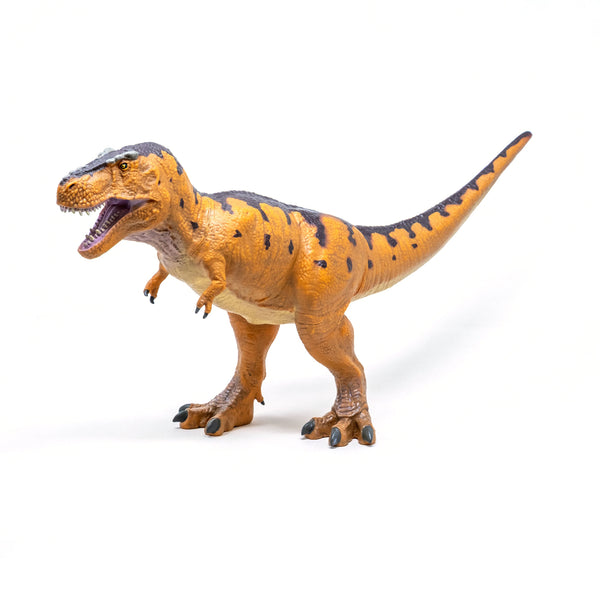
The most distinguishing feature of Spinosaurus was the prominent "sail" on its back, which could reach a height of 1.8 meters. It may have been the largest theropod, but its skeleton is only very incompletely known. It was excavated in Egypt before World War I by a German paleontologist, and the specimen was transported to Munich. It was described as a new genus and species in 1915, but all the materials that formed the basis of the research (known as the holotype) were lost in the 1944 World War II bombing. After the war, it was discovered that related theropods such as Baryonyx (UK) and Suchomimus (Niger) were widely distributed in Africa and Europe during the Cretaceous period, but the development of the "sail" on their backs was not as prominent as in Spinosaurus. The teeth of these spinosaurids were long and slender, lacking serrations, and their elongated jaws suggest that they primarily fed on fish. Furthermore, recently excavated fossils suggest the possibility of a semi-aquatic ecology, similar to crocodiles.
| English Name: Spinosaurus Origin of Name: Spiny Lizard Classification: Order Saurischia / Suborder Theropoda / Family Spinosauridae Size: Length 13-15 meters / Estimated Weight 4-6 tons Period of Existence: Late Early to Late Cretaceous (100 million - 90 million years ago) |
![]() |
What was the role of the sail?
The most distinctive feature was the "sail" on its back, which reached a height of 1.8m, and is believed to have been used for thermoregulation, intimidation of rivals, and attracting mates.
Elongated Jaw
Its elongated jaw, reminiscent of a piscivorous crocodile, suggests it primarily preyed on fish.
Was it semi-aquatic?
The fossil specimen excavated in 1912 was lost in an air raid during World War II, halting research. However, recently excavated fossils suggest the possibility of a semi-aquatic ecology, similar to crocodiles.
Imagine its size
← Older Post Newer Post →
