









Triceratops

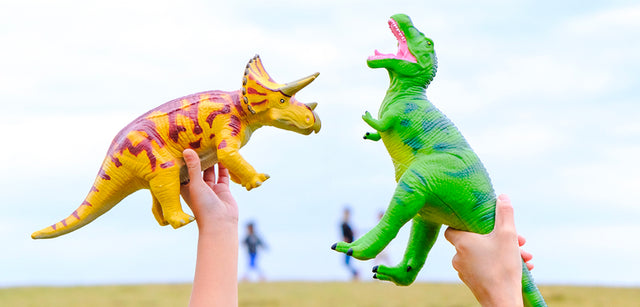
Triceratops is one of the largest horned dinosaurs that lived in the Late Cretaceous period of the Mesozoic Era, boasting high recognition alongside Tyrannosaurus. While horned dinosaurs have been identified in Asia and North America, horned Triceratops are only found in North America. Its name comes from the three long horns above its nose and eyes, and there is an anecdote that paleontologist Othniel Charles Marsh (1831-1899) initially mistakenly reported Triceratops horns as those of a bison. More than 50 skeletons, including skulls, have been discovered to date, but despite its massive head, its brain size is estimated to be only about 70 grams. It was also the last non-avian dinosaur to thrive until the moment of dinosaur extinction, similar to Tyrannosaurus and Edmontosaurus.
| English Name: Triceratops Origin of Name: Three-horned face Classification: Order Ornithischia / Suborder Ceratopsia / Family Ceratopsidae Size: Length 7-9 meters / Estimated Weight 7-9 tons Habitat Period: Late Cretaceous (70 to 65 million years ago) |
|
Three Horns
Many people likely envision these three sharp horns when they think of Triceratops. It had one short horn above its nose and two long horns above its eyes. It is believed that these were used as weapons for self-defense, and in conflicts between males within the herd.
Frill
Regarding the function of the frill that extended from the back of the head over the neck, there are various theories, including that it was used for intimidation or defense against predators, or for territorial disputes and courtship among the same species. One characteristic of this large frill is that it has no holes.
Physique
As one of the largest horned dinosaurs, it possessed a powerful and robust build. Furthermore, its head accounted for about a quarter of its entire body. If such a heavily armored body with sharp horns were to charge, the destructive power would undoubtedly have been immense.
Let's imagine its size

← Older Post Newer Post →