

Burgess's Supporting Cast
The surprisingly profound Wiwaxia
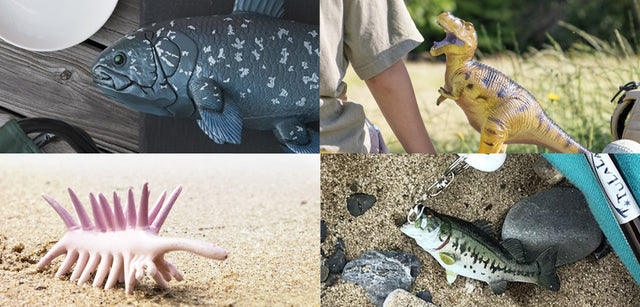
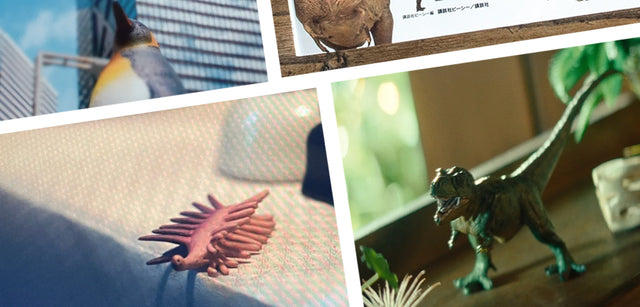
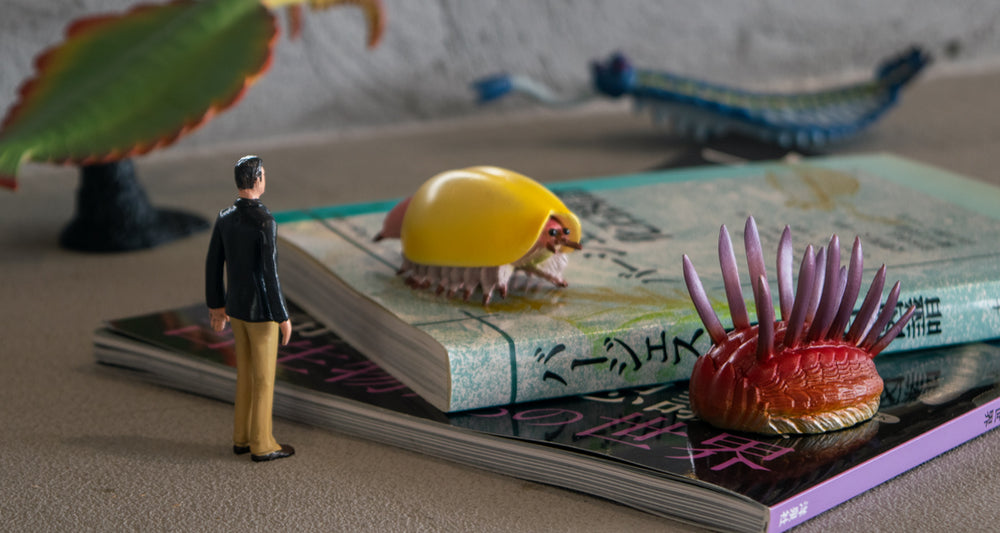
My impression of Wiwaxia was that it was a rather unexciting animal among the Burgess Shale creatures, usually depicted in illustrations and dioramas of the Burgess landscape, but mostly just sitting on the seabed. It didn't seem capable of swimming, and even when highlighted on its own, it still appeared unremarkable. Of course, a big part of this was that the other Burgess animals were simply too bizarre. Unlike Anomalocaris or Hallucigenia, there are no anecdotes about shifts in its reconstruction, so I had largely ignored it. However, once I started collecting materials for sculpting the Prehistoric Life Mini Model Series for Favorite Co., Ltd., I discovered its unexpected charm. Looking at various reconstructions, there seem to be several theories regarding the arrangement of its scales, with each differing. When sculpting the mini model series, I referenced research findings published shortly before, but I anticipate that new reconstructions will emerge as research progresses. Furthermore, there is a theory that its color was structural, which suggests the possibility of metallic and vivid hues. From that perspective, its body design also seems suited for structural coloration, and indeed, I colored the Wiwaxia mini model with structural coloration in mind. Though it may appear plain at first glance, it is, like the other Burgess Shale creatures, an interesting ancient organism whose future research I eagerly await.


The Charm of the Round Canadaspis
For me, the appearance of Canadaspis reminds me of the Garthim monsters from the movie "The Dark Crystal." While Garthim has a large pincer-like right arm and a much more aggressive design than Canadaspis, the basic design of having a large shell on its back is common, leading me to imagine that "Garthim larvae might have looked like Canadaspis." I've always wanted to sculpt Garthim myself, but I never had the opportunity. So, creating Canadaspis as a prototype for the Prehistoric Life Mini Model Series helped to satisfy my desire to sculpt Garthim. Additionally, there were materials available on the internal body structure within Canadaspis's shell, which allowed me to sculpt its underside (ventral side). This created an interesting contrast: while the design appears simple at first glance, flipping it over reveals a surprising amount of detail on the underside. This is a unique feature for a figure that can be viewed from various angles. The overall rounded design is also a charm of Canadaspis. Among the Hymenocarina class to which Canadaspis belongs, Canadaspis has a short abdomen extending behind its shell. The design, with its rounded shell, prominent eyes, and short abdomen, has an unparalleled "cuteness." Personally, I see it as the mascot character among the Burgess Shale creatures, and this was another enjoyable element to sculpt.
When it comes to Burgess Shale creatures, Anomalocaris is probably the most popular and well-known, followed by Opabinia and Hallucigenia, right? While those three are certainly representative due to their interesting and mysterious forms, it's undeniable that the presence of many unique characters like Wiwaxia and Canadaspis, which are too interesting to be mere supporting roles, significantly enhances the appeal of the Burgess Shale creatures. By carefully re-examining the various animals of the Burgess Shale, I believe we might discover new favorites and broaden our enjoyment of seeing fossils and exhibits.


References
- "Ediacaran and Cambrian Life" by Takeshi Tsuchiya, Gihyo-sha, 2013
- Special Exhibition "The Great Leap Forward of Life" Catalog, NHK, 2015
The "Paleontology Musings" series, which many of you have enjoyed, will be temporarily suspended after this update.
We would like to express our renewed gratitude to Hirokazu Tokugawa for his cooperation in writing the manuscript despite his busy schedule.
Thank you for your readership.


