


Ankylosaurus

The largest and most representative of the armored dinosaurs. Its entire back, from neck to tail, was covered with numerous bony plates and spikes. Its skull was also very thick and robust, with triangular horns protruding from the back of its head. The tip of its tail had a hard, club-shaped (hammer-shaped) bone, which is thought to have served as a defensive weapon when attacked by carnivorous dinosaurs such as tyrannosaurs. The teeth of ankylosaurs and stegosaurs were very small and weak, and while their primary diet is unknown, it is thought that they likely swallowed soft leaves whole and absorbed them in their bodies.
| English name: Ankylosaurus Origin of name: Fused lizard Classification: Ornithischia / Ankylosauria / Ankylosauridae Size: Body length 11 meters / Estimated weight 4 tons Period of existence: Late Cretaceous (70 to 65 million years ago) |
![]() |
Flat Hammer
The tip of its tail was equipped with a club-like structure resembling a flat hammer. It is thought to have served as a defensive weapon when attacked by carnivorous dinosaurs such as tyrannosaurs. When defending itself, it must have swung this club left and right, and if it hit an enemy, it would have inflicted significant damage. Since its habitat overlapped with fierce carnivorous dinosaurs like Tyrannosaurus, it likely needed to protect itself with such heavy armor.
Armor covering the entire body
The entire back of Ankylosaurus, from neck to tail, was covered with numerous bony plates and spikes, and its skull was also very thick and robust. This was effective in protecting it from predator attacks. The armor was thorough, even extending to its eyelids. However, its underside was unprotected, so it likely crouched on the ground to escape danger when attacked.
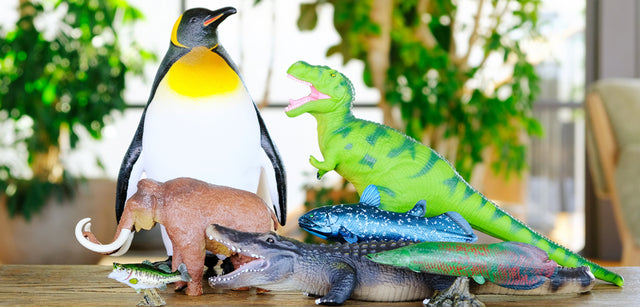
Imagine the size
← Older Post Newer Post →
