

New Dinosaur Treasure Museum

Vol. 77 The Current State of My "Lost World" Translated Book Collection

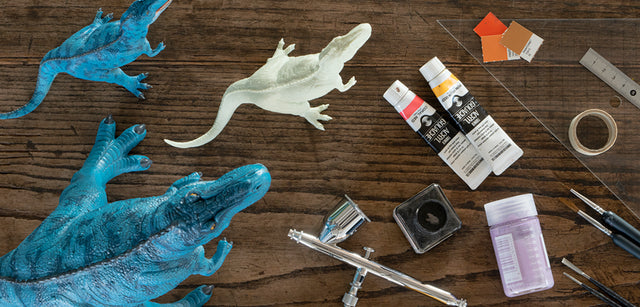
To be honest, I had planned to unveil the Futabasaurus type specimen replica from the Kahaku crowdfunding campaign this time, but the actual item that arrived closer to the deadline was a plain white, unpainted model, and not the life-size replica I had secretly hoped for, but a 1/3 scale version.

Looking back, there's no way you could buy a 1/1 replica for around 100,000 yen... no, this was a donation, so I'm ashamed of my greedy thoughts.

When illuminated, the shadows unmistakably reveal it as a Futabasaurus, but left as is, it just looks like a white mass.

So, I'll have to paint it myself.

That's why I'm determined to take countless photos of the real thing at Kahaku and, next time, show you a Futabasaurus skull that's almost indistinguishable from the real thing (?). Please look forward to it.

Image 1

*The 1/3 size was almost the same as the illustrations in the accompanying research paper. A small, pleasant discovery.

So, this time, I'm going to report on my collection of translated books of "The Lost World," a theme I had prepared in case the replica wasn't ready in time, and which has grown a bit recently.

"The Lost World"

Here is a list of translated books published to date. This is a revised edition of the list included in New Treasure House Vol. 30, with books acquired since then and brief explanations. Links are provided for articles already featured in the Treasure House. Especially recently acquired items are introduced with fresh illustrations.

I've focused the explanations on the Japanese names and illustrations of the dinosaurs that appear.

For some reason, in the world of "The Lost World" translated books, Japanese names were used not only before the war but also well into the 1970s. This is particularly interesting in the scene where Professors Challenger and Summerlee, facing the dismembered carcass of a Pterodactyl (Iguanodon), discuss whether it was the work of an "Iryu" (Allosaurus) or perhaps a "Hanryu" (Megalosaurus), with various Japanese names (especially for Megalosaurus) being jumbled depending on the translator, allowing one to gauge their understanding of dinosaurs. Incidentally, "Pterodactyl," "Iryu," and "Hanryu" are all respectable names coined by the famous Professor Matataro Yokoyama, but apart from "Iryu," the intention behind their naming is unclear. I plan to ask Mr. Nakatani of the Nagasaki Dinosaur Museum about it sometime.

The illustrations depict scenes where dinosaurs appear. The main appearance scenes of dinosaurs and pterosaurs in the story are:

1: Pterosaurs snatching roasted meat at the campsite before ascending the plateau.

2: Encountering an Iguanodon family.

3: Being attacked by a flock of pterosaurs at their nest.

4: An "Iryu" or "Hanryu" attacking the campsite at night.

5: Encountering a Stegosaurus by the lake at night.

6: Being chased by an "Iryu" or "Hanryu" at night.

7: A native village being attacked by an "Iryu" or "Hanryu."

8: A pterosaur brought to London escaping.

The illustrations are generally arranged in this order.

*Please also refer to New Treasure House Vol. 30.

1916 "To the Unknown World" by Furai-kyo Shujin / Kenkyusha (unowned)

First translation in Japan. Serialized in "Chugakusei" magazine from May of that year to June 1917. The content is unknown based on online information from Doyle enthusiasts. I found the October issue at the National Diet Library, but it's not viewable online, so I plan to visit soon.

1924 "Strange Footprints" by Utsuki Moto / Shineikaku (unowned)

Only information is that it's part of the "Detective Adventure Series." Not even at the National Diet Library. Does it even still exist?

1925 "The Fallen World" by Shintoshin / Kongosha (unowned)

The phrasing is old, but it seems to be a complete translation. The word "dinosaur" does not appear. Pterosaurs are translated as "hanyu" (feathered dragon), and "kenryu" (Stegosaurus) and "kinryu" (Pterodactyl) appear, but the "Iryu or Hanryu" scene is unfortunately cut.

*Book cover available in New Treasure House Vol. 7.

1929 "Tales of the Prehistoric World" by Kiichiro Oto / Kinransha

That scene is only described as "they began to discuss various things in front of the mass of meat."

*New Treasure House Vol. 56 contains an enthusiastic review I wrote after finally acquiring it.

1931 "Exploration of the Prehistoric World" by Kiichiro Oto / Kinransha (unowned)

A reissued edition of "Tales of the Prehistoric World." It is said to have an added appendix titled "Humans and Apes" at the end.

1933 "The Destroyed World" by Jiro Osaragi / Kaizosha (unowned)

*Included in "The Complete Works of Conan Doyle 5."

A book I recently learned about. A book cover image is online, and it has a profound binding made of leather. My wish list has grown again. A reprint was released in 2005, but that also seems hard to acquire.

1947 "Footprints of Dinosaurs" by Mitsuo Takagaki / Kaiseisha

The first "Lost World" after the war. The story mostly follows the original, but Gladys does not appear. It's disappointing that "kyoryu" (dinosaur) is written as Iguanodon, and "kinryu" (pterodactyl) is written as Brontosaurus, with rubi added specifically. The paper quality and printing are poor, but considering 1947 was shortly after the war, the year that 01 Godzilla attacked, it's understandable for a publication from that year.

*New Treasure House Vol. 7

1948 "Adventure in Monsterland" by Daisaku Ban / Meimeisha

A book I had been searching for for many years. I recently found it on Yahoo Auctions and went to some lengths to acquire it. Like "Footprints of Dinosaurs" from the previous year, this book is shoddily made, but I'm happy to show it in images. For some reason, the characters' names have been altered, but the main episodes are included. The Japanese names are confusing: "rairyu" (thunder dragon) for theropods, and "kyoryu" (dinosaur) for Iguanodon.

Image 2

〈By Daisaku Ban, Meimeisha (1948) Frontispiece/p27/p144〉

1949 "Footprints of Dinosaurs" by Mitsuo Takagaki / Kaiseisha (unowned)

*Reissue of the 1947 edition

1954 "The Lost World" by Jiro Osaragi / Koyama Shoten

*World Popular Novel Collection 1. The connection to the 1933 "The Destroyed World" by the same translator, Jiro Osaragi, is unknown.

In that scene, an "Iryu" appears, but Megalosaurus is referred to as "Kyoryu" (giant dragon) instead of "Hanryu."

1955 "Footprints of Dinosaurs" by Mitsuo Takagaki / Kaiseisha

*A substantially expanded and revised edition of the 1947 version, but the rubi errors remain.

1955 "The Lost World" by Taro Shioya / Kodansha

"I'd say it's a type of Allosaurus." "Or it could be a Hanryu." Did the translator know "Hanryu" but not "Iryu"? The illustration of the first "Kinryu" encountered is a Brontosaurus. Is this because the artist referenced "Footprints of Dinosaurs"?

1958 "The Lost World" by Michitaka Karasawa / Kin no Hoshi Sha

*Hiragana World Masterpieces

This is another book I recently acquired, but unfortunately, it's missing its cover. There are no conversation scenes, but there's a page at the beginning introducing dinosaurs with illustrations, including the "Kinryu." However, it clearly looks like a Parasaurolophus. This book is rich in illustrations, including a triple-fold color frontispiece. It's not entirely written in hiragana; easy kanji also have hiragana rubi.

Image 3

〈Translated by Michitaka Karasawa, Kin no Hoshi Sha (1958) Frontispiece/p10/p11/p59/p81/p89/p100/p114/p115/p116/p117/p169〉

1960 "Footprints of Dinosaurs" by Zenji Katafuchi / Iwasaki Shoten

Though a juvenile novel, it's largely faithful to the original. The carnivorous dinosaurs debated by the two professors are named Allosaurus and Hanryu.

1960 "The Lost World" by Masami Fukushima / Gakushu Kenkyusha

*Appendix to "First-Year Junior High Course." The pterodactyl in London at the end is cleanly cut...

1961 "The Lost World" by Ken Nobuhara / Shinchosha Bunko

Megalosaurus is referred to as "kyoryu" (giant dragon).

1961 "The Lost World" by Shigeru Shiraki / Gakushu Kenkyusha

*Appendix to "Gonen no Gakushu"

The story is heavily abridged until reaching the plateau. The dinosaurs that appear are replaced with Brontosaurus and Tyrannosaurus. However, the cover shows a Ceratosaurus.

1962 "Mystery Dinosaur Kingdom" "Shogaku Gonensei" December issue / Shogakukan

*Please see New Treasure House Vol. 62.

1963 "The Lost World" by Tetsuo Shinjo / Hayakawa SF Series

At the end of the book, there is a dinosaur explanation by Masami Fukushima, a doyen of the SF world at the time, using photos of Zallinger's murals, but unfortunately, it's full of errors.

1965 "Mystery Dinosaur Kingdom" "Shogaku Rokunensei" March issue / Shogakukan (unowned) This series will be complete with this one book. It's my next goal.

1965 "The Dinosaur Plateau" by Taro Shioya / Obunsha

*Appendix to "Chuni Jidai"

The illustration of the Pteranodon has a thick, long tail.

1966 "The Lost World" by Masayuki Shinohara / Shogakukan

*Included in "Masterpieces of World Literature for Boys and Girls, British Edition 6."

I recently stumbled upon and acquired this book online. In the professors' conversation, "kinryu/iryū" appears, but Megalosaurus is, embarrassingly, referred to as "ōkyōryū" (large dinosaur). Although there are no illustrations of dinosaur scenes, there is a color frontispiece of the pterosaur attack scene and a dictionary-like illustration page (where theropods are called "kyōryū"). There is also a rare-angle illustration of the group crossing a bridge. The illustrations are very meticulously drawn, but the artist's name is not recorded.

Image 4

〈Translated by Masayuki Shinohara, Shogakukan (1966) Frontispiece / p445 / p435 /〉

1966 "The Lost World" by Shigeru Shiraki / Kaiseisha

*Adventure Masterpiece Collection

Similar to the 1961 "Gonen no Gakushu Bunko" by the same translator, the dinosaurs are replaced with Brontosaurus and Tyrannosaurus. The book is rich in illustrations, including color frontispieces and other drawings.

1967 "The Lost World" by Jun Nagai / Kadokawa Bunko

The illustration of the "Kinryu" (Pterodactyl) is a Brontosaurus. Is the scene where the "Kinryu" is attacked by a theropod a Brontosaurus vs. Ceratosaurus?

1967 "Mystery Dinosaur Kingdom" "Shogaku Yonensei" January issue / Shogakukan

*New Treasure House Vol. 62 (mistakenly listed as December issue)

1967 "The World of Dinosaurs" by Minoru Kume / Iwasaki Shoten

*SF World Masterpieces

Yoji Kuri's pop illustrations are so delightful that the types of dinosaurs almost become secondary.

1968 "The Lost World" by Mitsuo Takagaki / Kaiseisha

*Masterpieces of World Literature for Boys and Girls

Same content as the 1955 edition of "Footprints of Dinosaurs."

1969 "Mystery Dinosaur Kingdom" "Shogaku Yonensei" June issue / Shogakukan

*New Treasure House Vol. 62

1969 "The Lost World" by Ichiro Kano / Gakushu Kenkyusha

*Appendix to "Gonen no Gakushu"

Dinosaur names are not specifically mentioned. The illustrations seem to reference the 1966 Kaiseisha edition.

1969 "The Lost World" by Naotaro Tatsuguchi / Sogensha Mystery Bunko

Megalosaurus is once again a giant dragon.

1970 "The Lost World" by Shozo Kashima / Hayakawa Shobo

*World SF Complete Works

Megalosaurus is "large dinosaur." This is the only translation where Archaeopteryx is mentioned when bird-like footprints are discovered.

1970 "The Lost World" by Ko Doi / Iwasaki Shoten

*SF Shonen Bunko

Although there are some omissions, it is mostly faithful to the original. The frontispiece and illustrations of dinosaurs are as realistic as those in an encyclopedia.

1971 "The Lost World" by Yoshihiko Shirayanagi / Poplar Publishing Co.

*World Masterpieces

Despite being a juvenile novel, it's a complete translation. Annotations and explanations are thorough. It abandons Japanese names for dinosaurs except for Stegosaurus. Japanese dinosaur names significantly decreased in use from the 1970s onwards.

1971 "Exploration of the Dinosaur World" by Shigeru Shiraki / Akane Shobo

*Complete Works of SF Literature for Boys and Girls

Shiraki Shigeru's third translation. Features "kangaroo-like" Brontosaurus, Cerato-like theropods, and Briand-like Tyrannosaurus, among others.

1972 "The World of Dinosaurs" by Hikawa Ro / Poplar Publishing Co.

*SF Series

A book that was hard to get my hands on. Features Ceratosaurus-like "Giant Dragons (Megalo)" and mammal-like "Kinryu" (Pterodactyl).

Image 5

Translated by Hikawa Ro, Poplar Publishing Co. (1972) 〈p91/p119/p124/p125/p157〉

1973 "The Last Dinosaur World" by Hiroshi Minamiyama / Asahi Sonorama

Another recent acquisition. The illustrations are by one of Showa's legends, Ryuji Yanagi. In this book, the professors only say, "Perhaps an Allosaurus," and "All large carnivorous dinosaurs are suspects," not mentioning Megalosaurus. The illustration of a "freshwater Plesiosaurus" seen by the lake is rarely found elsewhere.

Image 6

Translated by Hiroshi Minamiyama, Asahi Sonorama (1973)

〈Frontispiece/p34/p35/p85/p86/p118/p119/p141/p179/p199/p213〉

1973 "The World of Dinosaurs" by Masao Segawa / Shueisha

*Masterpieces of Literature for Mother and Child

This children's book for younger readers covers the essential points. No Japanese names.

1974 "The Lost World" by Shigeru Shiraki / Kaiseisha (unowned)

*Adventure Detective Series, a redesigned new edition of the 1966 version

1974 "Dinosaur World Exploration" edited by Osamu Tezuka, illustrated by Takeshi Hasegawa / Gakushu Kenkyusha

*Graphic Novel Suspense

A graphic novel associated with Osamu Tezuka. The story largely follows the original, but the ending, like in the movie version, features a massive volcanic eruption. Incidentally, the pterosaur brought back to London is a Dimorphodon!

1975 "The Lost World" by Taro Shioya / Tsuru Shobo

This is the same translation as the 1955 Kodansha edition, so "Kinryu" (Pterodactyl) is used, but the illustrations have been appropriately changed to Iguanodon.

1975 "Living Dinosaurs" by Michitaka Karasawa / Kin no Hoshi Sha

Same as "The Lost World" from 1958. This "Kinryu" is still a Parasaurolophus.

1976 "The World of Dinosaurs" by Minoru Kume / Iwasaki Shoten (unowned)

*SF Children's Library

Same as "SF World Masterpieces 13" published in 1967.

1977 "The Lost World" by Tadashi Sadamatsu / Shun'yodo Shoten

*Shun'yodo Shonen Shojo Bunko

Almost a complete translation. Despite being a new translation, the term "Kinryu" (Pterodactyl), which was becoming obsolete, is used. Also features illustrations of dragon-like pterosaurs.

1978 "The Lost World" by Ko Doi / Iwasaki Shoten

*SF Shonen Bunko

Reissue of the 1970 edition.

1979 "The World of Dinosaurs" by Shigeru Uchida / Shueisha

*World Masterpieces for Children

Enjoy the illustrations by Tatsuo Ikeda.

1981 "SF Dinosaur Great Adventure" (6th Grade Science Material / Gakushu Kenkyusha)

*New Treasure House Vol. 56

1983 "The Lost World" by Toshiko Yamau / Gyosei

*Complete Works of World Masterpieces for Boys and Girls

Japanese names are also included but are understated. They are enclosed in parentheses, such as Iguanodon (Kinryu), Megalosaurus (Kyoryu), and Pterodactyl (Yuryu). At some point, "Pterosauria" became "Yuryu" (winged dragon)...

1986 "The Lost World" by Ko Doi / Iwasaki Shoten (unowned)

*SF Romantic Bunko, same as the 1978 edition

1994 "The Lost World" by Naotaro Tatsuguchi / Sogen SF Bunko

*Reissue of the 1967 edition

1994 "The World of Dinosaurs" by Shigeru Uchida / Shueisha

*Forest of World Literature for Children

A new edition of the 1973 version. As expected, after Jurassic Park, the commentary and illustrations at the end have been revamped.

1995 "The Plateau Where Devils Dwell" by Takako Takano / Shogakukan

A disclaimer at the end states it is "a new translation of the highlights of the original." The illustrations are original, using landscape-style drawings and photographs. There is also a commentary on the Guiana Highlands, which served as the model.

1996 "The Lost World" by Shozo Kato / Hayakawa Bunko SF

*Same translation as "World SF Complete Works" published in 1970

1998 "The Lost World" by Ei Mori / Kodansha

*Thrilling World Adventure Literature

Doyle's original work freely adapted, with the ending also altered. The number of dinosaurs appearing has been greatly increased, and the "Thrilling Mini Encyclopedia" at the end, which is a helpful guide, features a lavish 16 types of "appearing ancient creatures."

2002 "Ei Mori's The Lost World" by Ei Mori / Kodansha

*Series: Adventure

A reissued and revised edition of the 1998 version, but with illustrations and the "Thrilling Mini Encyclopedia" at the end omitted, making it 300 yen cheaper.

2003 "The Lost World" by Minoru Kume / Iwasaki Shoten

*Adventure Fantasy Masterpieces

This is a reprint of the 1967 "SF World Masterpieces Series," but for some reason, the illustrations have changed from Yoji Kuri to Izumi Takemoto.

2004 "The Lost World" by Hiroshi Suga / Kodansha Aoi Tori Bunko

Complete translation. As expected, there are no Japanese names for the dinosaurs.

2005 "The Destroyed World" by Jiro Osaragi / Hon no Tomosha (unowned)

*Complete Works of Conan Doyle 5

A reprint of the book published by Kaizosha in 1933. I regret missing the publication of this book...

2006 "Mystery Dinosaur Kingdom - Included in Taro's Adventures" by Osamu Kishimoto / Apple BOX Create

A compilation of manga by Osamu Kishimoto, a Showa-era cartoonist, including "Mystery Dinosaur Kingdom" published in the January 1967 issue of "Shogaku Yonensei."

*New Treasure House Vol. 62

2009 "The Lost World" by Naotaro Tatsuguchi / Sogen SF Bunko

First published in 1969. Limited edition cover to commemorate the 50th anniversary of Sogen Bunko. Of course, the translation is still the old one.

2015 "The Lost World" by Hiroshi Suga / Kodansha Aoi Tori Bunko

A new edition of the 2004 version. The cover, illustrations, table of contents design, and character faces have changed, and the translator's preface has been expanded.

2016 "The Lost World" by Ibuki Fushimi / Kobunsha Classics New Translation Bunko

In addition to a complete translation, it uses original illustrations from "The Strand Magazine," where "The Lost World" was first serialized. Numerous annotations are also included.

*New Treasure House Vol. 56

2020 "The Lost World - The World of Dinosaurs -" by Taku Ashibe / Gakken Plus

*World Masterpieces to Read by Age 10

Although abridged, the episodes are largely faithful to the original. The types of ancient creatures that appear are exactly the same as in the original, but the illustrations are, of course, contemporary. The conversation between the two professors is incorporated into the night attack scene, and it is there. Naturally, it's "Could it be an Allosaurus?" "Or perhaps a Megalosaurus."

*New Treasure House Vol. 56

2020 "The Lost World" translated by Naoya Nakahara / Sogen SF Bunko

A complete translation with original illustrations, seemingly a response to the 2006 Shinchosha Bunko edition. For a detailed comparison, see New Treasure House Vol. 56.

There are only 10 more unpurchased books. Of course, unknown "Lost Worlds" will continue to be unearthed, but I aim to completely conquer them as my life's work.

Now, let me introduce some rather unusual goods I recently acquired.

Image 7

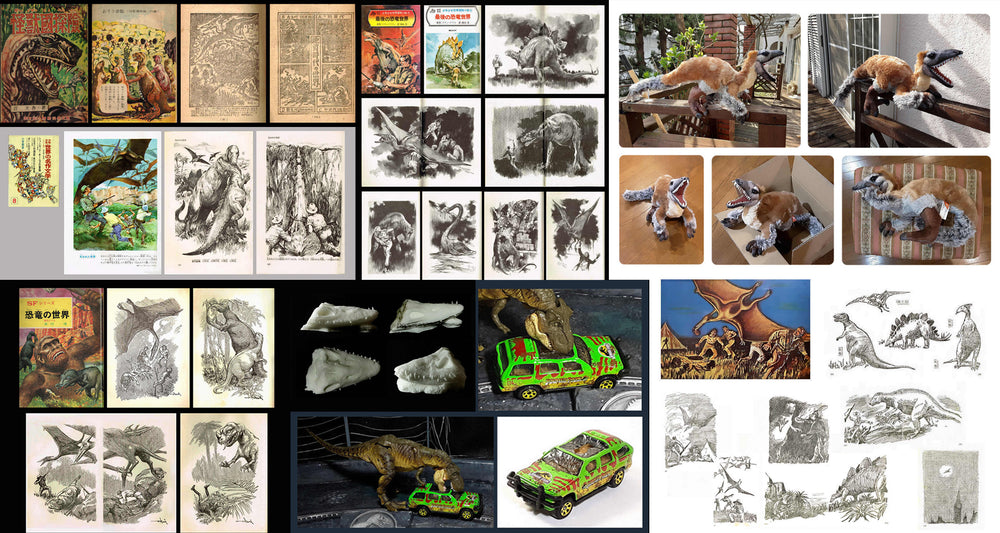
It's not the T-Rex, but the battered car. The Ford Explorer used in the famous scene from Jurassic Park. It's a Matchbox mini-car.

While regular versions are sold by various companies (even Tomica!), this damaged version seems to be a rare item, not sold on Amazon, and fetching around 4,000 yen on Mercari. I bought it for 660 yen at a US sundries store on Komachi-dori in Kamakura, and later chuckled a bit when I looked it up online.

The T-Rex is a bit large, but it's an excellent item with posable joints, the JP T-Rex from Kaiyodo's Revoltech series. The base is a reuse from two posts ago, ignoring the scale. I think it turned out pretty atmospheric.

It's a shame the children aren't inside the car.

Image 8

I impulsively bought this Velociraptor plush online. I usually don't buy plush toys, but I fell in love with its feathered dinosaur appearance at first sight. Made by Wild Republic, it cost almost 10,000 yen, but it's very well made. Even the scales on its feet are represented. If I had any sewing skills, I'd extend its legs and tail, and complement its teeth and claws with resin to make it more realistic, but that's impossible for me, who can't even sew a button. Still, when captured in a photo like this, it has a surprisingly lifelike presence, and it made me feel nostalgic for Fusako, the cat I once lived with.


Older Post Newer Post